

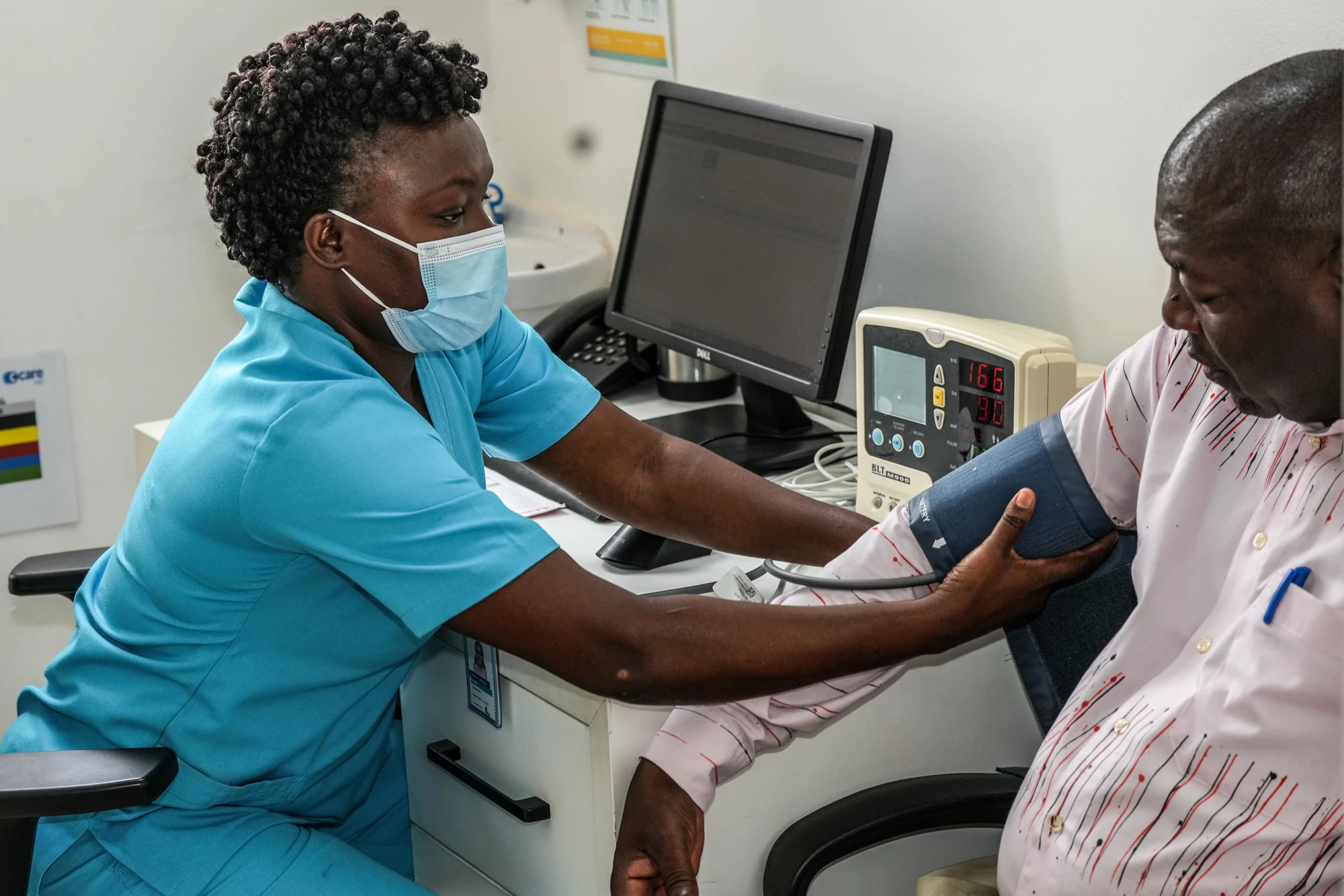
To achieve the World Bank Group’s goal of supporting countries to expand health services to 1.5 billion people by 2030, a combined effort from both public and private health sectors is required in financing and service delivery.
More than half of the world's population — 4.5 billion people — lack access to essential health services. This challenge is made worse by pandemics, medical supply shortages, aging populations, and overburdened public health systems.
A strong private sector adds essential capacity, medical technologies, and advanced services that improve access to quality care. As a result, financing through the private sector is a critical component in helping countries achieve quality, accessible primary care. Between 2021 and 2023 alone, IFC’s investments in private healthcare services helped our clients reach 61.5 million patients across the globe
Why is investment in private healthcare necessary for primary health services?
In many developing countries, access to quality and affordable healthcare remains out of reach because governments cannot keep up with the growing demand. In 2024, combined government and donor spending on health averaged just $17 per capita in low-income countries—less than one-third of the $60 estimated minimum needed to deliver a basic package of essential services.
The private sector already provides 40% or more of health services in many developing countries. Strategic investments in the private healthcare sector free up public funds to support the most vulnerable populations while expanding overall capacity. This approach is central to the World Bank Group’s commitment to help countries deliver quality health services to 1.5 billion people by 2030. On the public sector side, we work with governments to build stronger, more resilient health systems and provide quality, affordable healthcare for all. IFC complements this work by strengthening private hospitals that serve a broad spectrum of income groups and advising governments on effective public-private partnerships and contracting of health services.
Why is investing in private healthcare so urgently needed?
The need for a scaled-up response is urgent, driven by several factors. Noncommunicable diseases like cancer, diabetes, and cardiovascular disorders are rising globally, with 73% of deaths from these diseases — and 82% of premature deaths—occurring in low- and middle-income countries.
A primary reason for this is a lack of diagnostic capabilities. A survey of 10 countries found that the median availability of basic diagnostic testing was only 19% in basic primary care clinics, 49% in even advanced primary care facilities, and 70% in hospitals. This disparity has life-or-death consequences. For example, the five-year breast cancer survival rate in Europe is over 75%, but in sub-Saharan Africa, it is about 50% due to limited screening and treatment options. In Africa, where two-thirds of all MRI machines are in private facilities, support for private hospitals is direct support for better care.
Furthermore, no health system can function without trained personnel. Africa faces a projected shortage of 4.2 million healthcare workers by 2030, while Southeast Asia will need 6.9 million more. Private hospitals create essential healthcare jobs — our investments support nearly 400,000 — and provide training that benefits the entire system, helping retain skilled workers where they are needed most.
How do IFC's healthcare investments advance primary healthcare goals?
IFC investments provide much-needed funds for healthcare systems. But beyond funding, IFC’s investment strategy has a multiplier effect. When private hospitals establish advanced oncology units, they make cancer care more accessible, reduce costs for patients who would otherwise travel abroad, and create centers of excellence that can guide the public sector. This also helps attract and retain specialized healthcare professionals.
How does IFC promote ethical standards and patient safety?
We recognize the potential for problems in any healthcare setting. IFC helps clients improve their operating systems, and we expect them to respond quickly and with integrity when problems arise.
IFC is constantly improving its appraisal and supervision for every healthcare investment. We work to identify risks related to patient safety before we invest and demand that our clients align with ethical principles of healthcare. IFC will not work with clients who do not commit to – and follow – our Environmental and Social Performance Standards. As of 2024, we also require new clients to commit to specific ethical principles and practices for patient care.
In addition to investments, our advisory programs help clients and non-clients improve their standards. Over 230 private hospitals, mainly in North Africa and Sub-Saharan Africa, have worked with IFC to enhance their quality-of-care, improving services for more than 2 million patients annually. The Ethical Principles in Healthcare (EPIHC) initiative, launched by the World Bank and IFC, now includes over 400 signatories managing more than 6,000 facilities in 100 countries, helping them integrate ethical practices into their operations.
We believe that health systems are strongest when public and private sectors work together to reach patients across income levels. Through greater partnership and complementarity, we can help elevate standards of care.
How IFC delivers impact in the healthcare sector
Last updated: March 2025