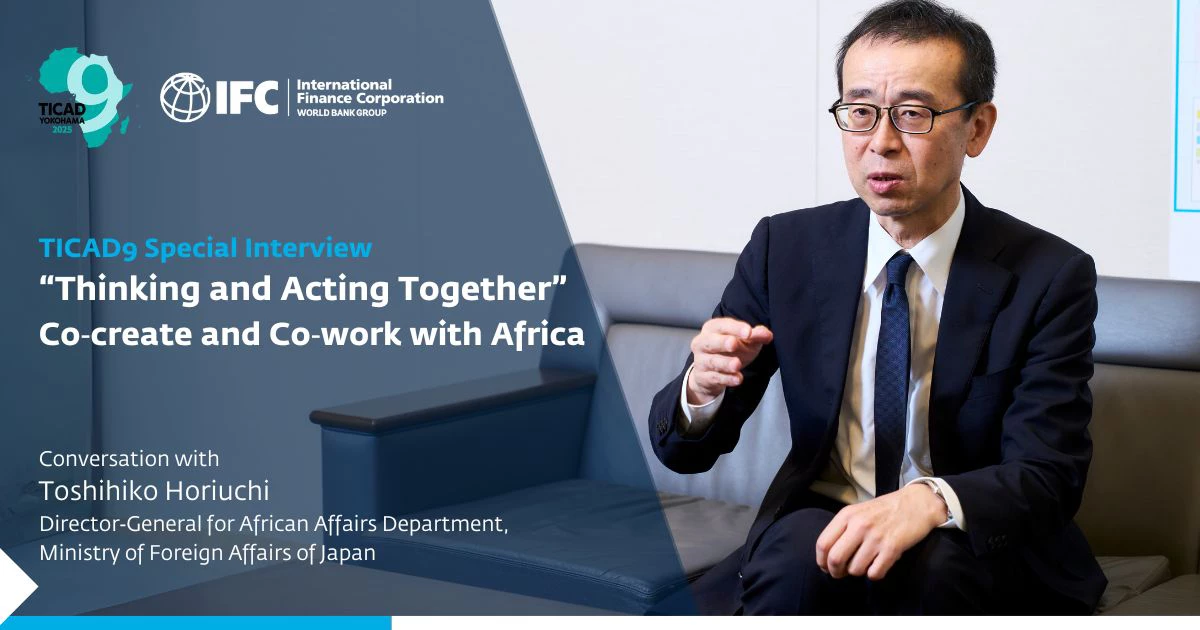
Africa is experiencing the fastest population growth globally. Despite its large, youthful workforce and immense growth potential, the continent faces a series of development challenges—from deteriorating climate change damage to limited energy access and food insecurity. As the Ninth Tokyo International Conference on African Development (TICAD9) approaches, scheduled for August 20–22 in Yokohama, we interviewed Toshihiko Horiuchi, Director‑General for African Affairs Department at the Ministry of Foreign Affairs of Japan, on their vision and committment to advancing development cooperation with Africa.
Interviewer: Tadashi Yokoyama, Director, IFC Tokyo Office
How would you see Africa today?
By 2050, Africa is projected to account for one quarter of the world’s population. It is a young continent, with many eager to engage in business with Japan and the broader global community. On one hand, it remains vulnerable to external shocks such as climate change and continues to face human security challenges. With public financing in short supply, mobilizing private capital and fully leveraging domestic resources will be essential to securing the continent’s sustainable prosperity.
I completely agree. Africa is a top priority for the World Bank Group, with investments totaling roughly $38 billion*—the largest of any region. From your perspective, what are the key factors critical to unlocking Africa’s potential and advancing its economic and social development?
First, it is about creating jobs. With youth unemployment on the rise, opinion polls across many African countries consistently show that employment is the top concern among the public. I hear this sentiment firsthand in my conversations with people in Africa. At TICAD 9, employment is a central theme, and I have high expectations for the private sector’s role in driving job creation.
*World Bank Annual Report 2024
“Job creation” is also a top priority in the World Bank Group’s strategic agenda; and IFC, our arm for private sector development, is proactively working to scale up capital mobilization. Access to finance is certainly essential for private enterprises to grow.
Definitely. I recently had the opportunity to speak with businesspeople from Africa. When I asked about their biggest business challenge, every one of them pointed to “access to finance.” As they told me, “We simply can’t get loans. The interest rates are far too high.” It was a clear reminder that financing remains the biggest barrier to business growth. By combining the lending capacity of local banks with IFC’s ability to mobilize capital—and finding effective ways for Japan to engage and contribute—I believe we can help address these challenges.
"I often hear from local communities that “the Japanese think with us and act alongside us.” I believe this comes from the fact that Japan itself once faced very difficult circumstances and was able to overcome them thanks to partnerships with the international community. In Africa, many people are familiar with Japan’s Meiji Restoration and post-World War II reconstruction, which helps foster a positive image of Japan. I believe this is one of Japan’s greatest strengths."
That’s the reason we focus on investing in and financing local financial institutions, while also providing advisory services to build their capacity to extend credit. We are currently increasing equity investments to help close the capital gap for African businesses. Looking ahead, we also plan to strengthen our role as a distributor, which encompasses activities such as crowding additional investors to participate in the transactions we originate.
The Diet recently amended the JICA Act and expanded the financial tools for JICA’s Private Sector Investment and Finance (PSIF) Scheme. We plan to use JICA’s PSIFas a catalyst, leveraging it to create the best possible mix of public and other financial sources. To make this work, close “co-creation” and “co-working” with the World Bank Group, including IFC, will be more important than ever.
IFC and JICA have already partnered on numerous co-financing deals, totaling over $3 billion since 2017. This is truly an outstanding achievement. By combining IFC’s expertise and track record in supporting the private sector with JICA’s financing tools and its network of Japanese companies, we hope to create a positive cycle that uncovers more projects and attracts greater private capital.
We certainly see potential for our collaboration with JICA to grow--including in areas like corporate bond investments. And as you put it, international collaboration is key to driving development forward. What is Japan's expectation through TICAD?
Since it started in 1993, TICAD has guided Africa’s development for over 30 years, playing a key role during important paradigm shifts. TICAD has proudly led international discussions on Africa’s development, focusing on themes such as human resource development, private sector–led growth, quality infrastructure, and human security. One thing that really sets TICAD apart is that it is not just a bilateral partnership between Japan and Africa—it is a collaborative effort involving multilateral organizations. The theme for TICAD 9 is “Co-create Innovative Solutions with Africa,” which highlights our call for Africa to hold the reins and collaborate with diverse partners to develop effective solutions. We are truly grateful to the World Bank Group for walking alongside us as a co-organizer throughout this journey.
What impact do you hope TICAD will achieve? Could you share any specific examples?
TICAD really serves both as a platform for co-creation and co-working, and as a showcase where each partner brings their best strengths to the table and shares them. Japan has many companies with outstanding technologies, services, products, skills, and strong ethical values. We plan to further support their overseas expansion by making the most of these strengths. In that context, it is crucial to work closely not only with local Japanese companies but also with companies from third countries; and the Ministry of Foreign Affairs of Japan stations officials in charge of cross-border economic affairs at embassies worldwide, who are there to facilitate such collaborations. Under the banner of “Made with Japan,” we plan to place greater emphasis on encouraging countries in Africa to co-create solutions with us, while promoting initiatives such as “JICA Biz” and Japanese impact funds to support these efforts.
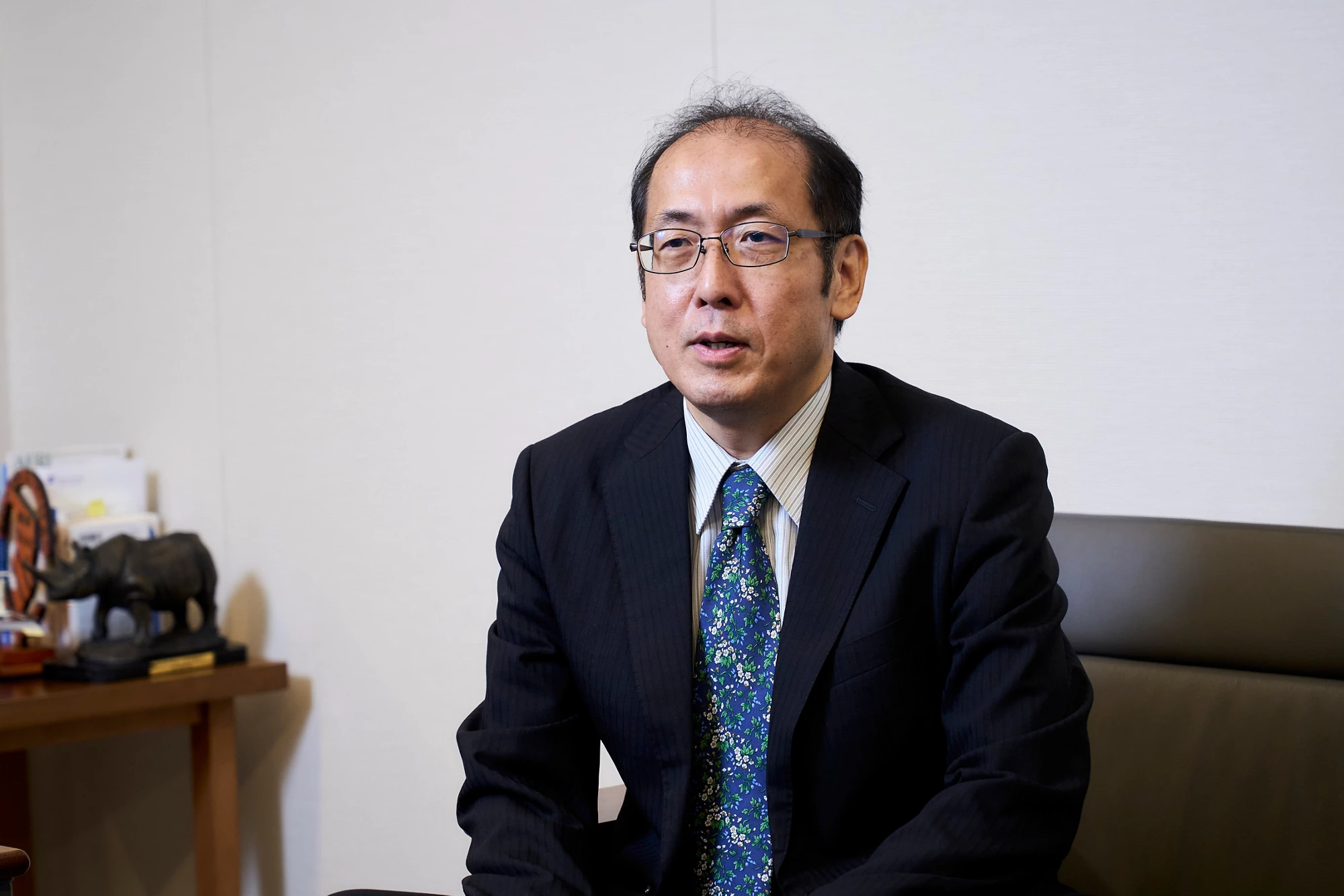
Tadashi Yokoyama, Director, IFC Tokyo Office
Later this year, IFC plans to launch the “Tokyo Business Development Hub.” We envision it as a bridge to connect Japanese expertise and capital with local partners to help drive Africa’s growth. In 2023, Japan revised its Development Cooperation Charter, introducing a more proactive form of support known as the “Co-creation for common agenda initiative.”
The "Co-creation for common agenda initiative" builds on and goes beyond traditional official development assistance by actively mobilizing additional public and private capital and offering attractive cooperation packages that leverage Japan’s strengths. This approach centers on “co-creating” solutions together with partner countries.
Japan has supported Africa’s development with Africa taking the lead, guided by our principles of “ownership” and “partnership.” Our strong reputation on the ground comes from sending people to work alongside local communities, facing challenges together, and investing in local human resource development. Japan plans to continue this approach, focusing on developing local talent, maintaining infrastructure, and strengthening social services like education and healthcare.
Development cooperation is at a challenging crossroads. How does Japan view this situation?
With global security challenges growing and fiscal pressures tightening, development cooperation is certainly facing some tough headwinds. Still, the Government of Japan believes it is essential to continue firmly advocating for multilateral cooperation and development cooperation. What I would like people to remember is that Japan, too, was once a beneficiary of aid. Projects like the Shinkansen (bullet trains) and the Kurobe Dam (Japan’s tallest dam) were supported by the World Bank. Building on this history, the Government of Japan recognizes the need to think about what makes for a favorable international environment—not just for Japan but for the world—and continues its sincere efforts to foster a shared understanding of this vision. We really hope the World Bank Group will stand alongside us in this effort.
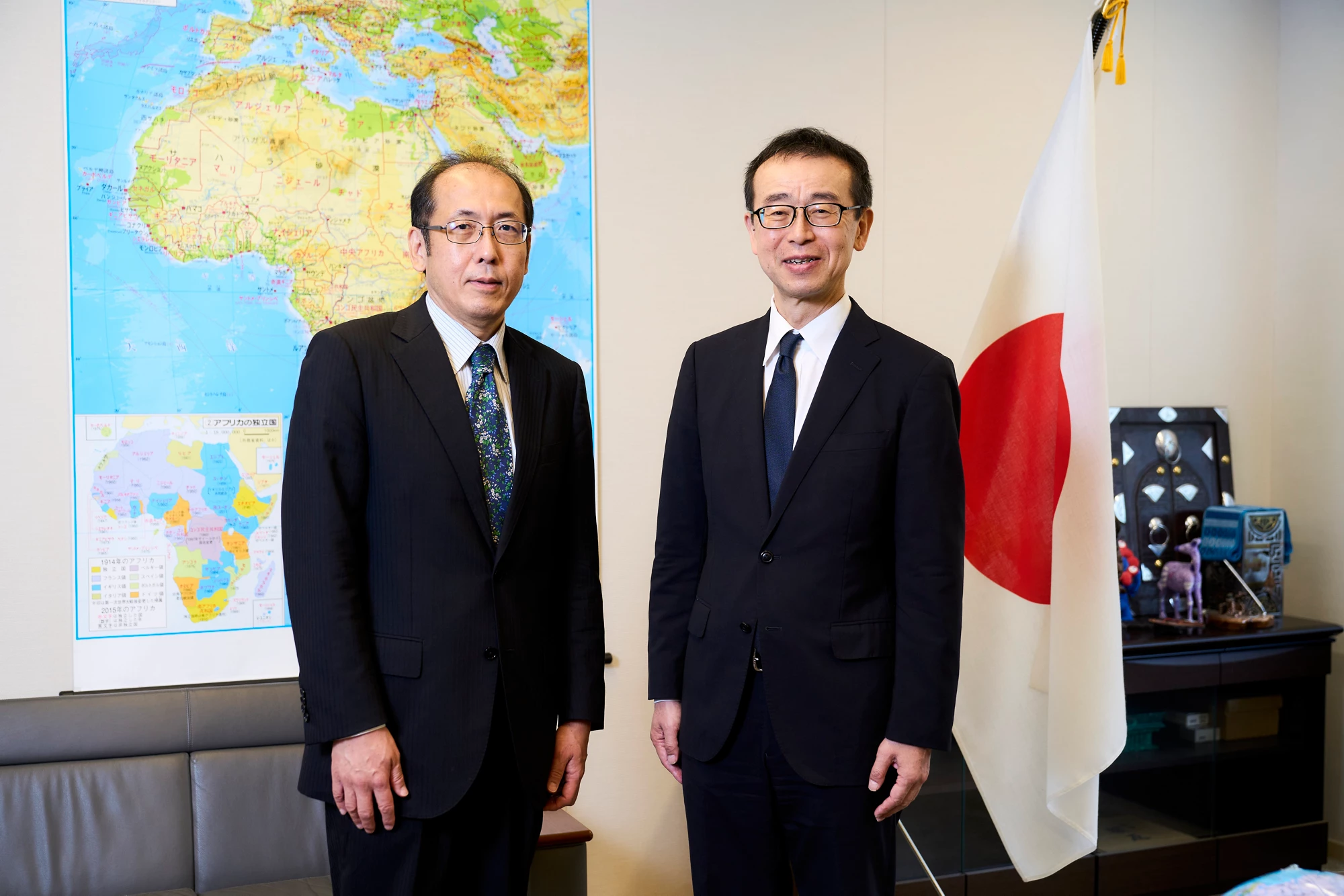
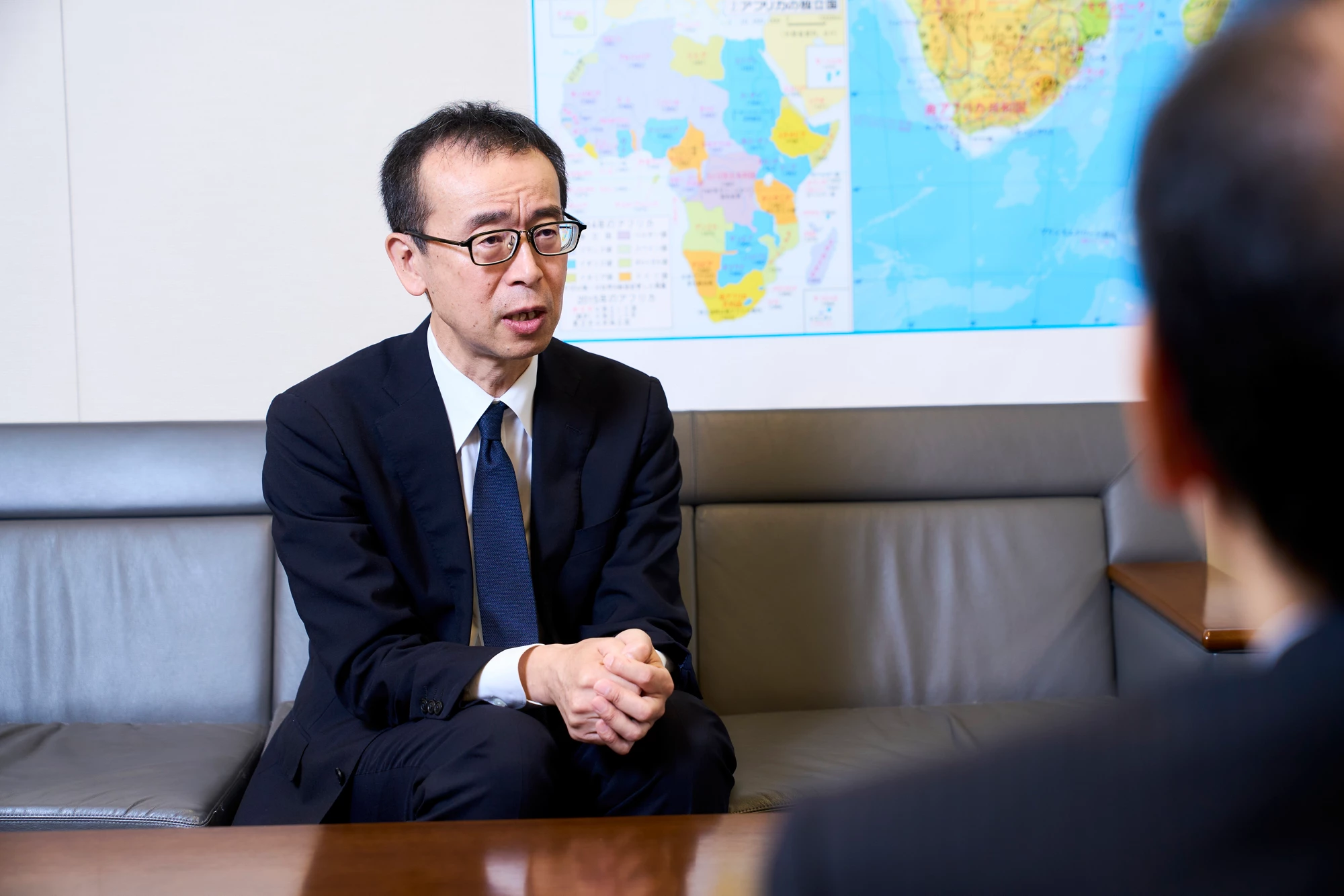
Right: Toshihiko Horiuchi, Director‑General for African Affairs Department, Ministry of Foreign Affairs of Japan
Left: Tadashi Yokoyama, Director, IFC Tokyo Office
IFC–Japan Partnership in Africa
IFC supports development across Africa by providing investment and advisory services in a broad range of countries and sectors, including the poorest and most fragile countries. IFC maintains vital partnerships with the Government of Japan, Japanese companies, and public institutions through trust funds, co-financing, and other initiatives, combining financial resources and technical expertise to maximize impact.