
Jordan Kuwait Bank's second green bond with IFC builds on Jordan's first green bond, helping expand investment in green buildings, water and energy projects while strengthening the country's green finance market.
Three years after partnering with Jordan Kuwait Bank to launch Jordan's first-ever green bond, IFC is investing in the bank's second green bond, continuing to help scale sustainable finance in the Kingdom. Backed by a blended finance incentive under the IFC-UK Market Accelerator for Green Construction (MAGC), the investment will help expand financing for certified green buildings while supporting water, energy, and sustainable urban development projects.
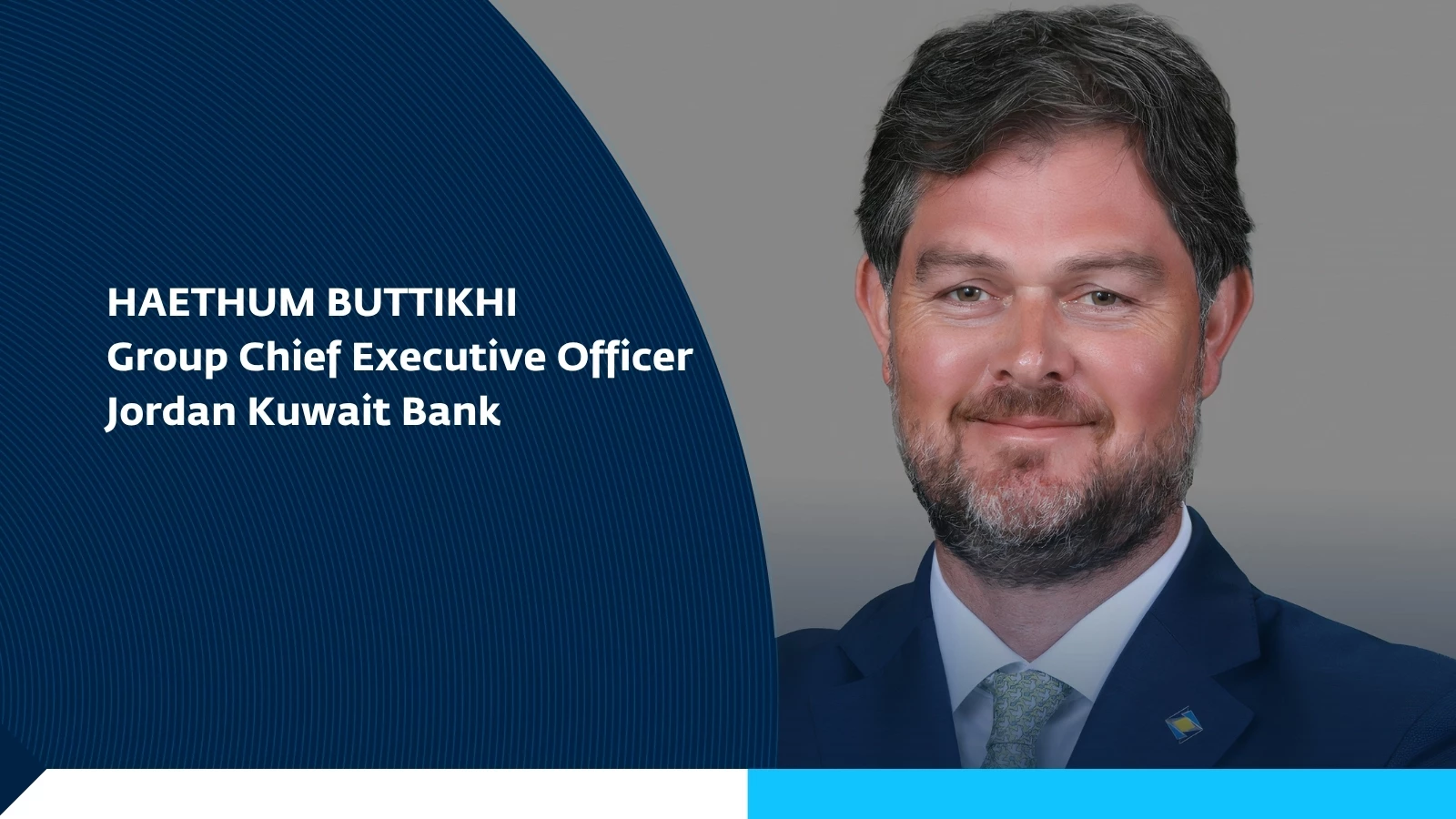
IFC sat down with Haethum Buttikhi, Group Chief Executive Officer of Jordan Kuwait Bank, to discuss why this investment matters, what the first green bond has achieved, and how pioneering transactions like these are helping catalyze broader market adoption by encouraging other financial institutions to follow suit.
“The [first] Green Bond’s projects contributed to the treatment of approximately 114 million cubic meters of wastewater annually, and improved water and wastewater services for around 36,000 beneficiaries across 15 towns in Jordan,” says Haethum Buttikhi, Group Chief Executive Officer of Jordan Kuwait Bank.
1. How would you characterize the partnership between Jordan Kuwait Bank and IFC?
Our partnership with IFC represents a long-term strategic collaboration built on a shared commitment to advancing sustainable finance and supporting Jordan's economic development priorities. Over the years, IFC has been more than an investor—it has been a trusted partner, bringing together global expertise, local technical knowledge, and innovative financing solutions that have helped strengthen Jordan's financial sector and expand access to sustainable investment opportunities.
A defining milestone in this partnership was the launch of Jordan's first Green Bond in 2023. Together, we introduced a new financing instrument to the local market, demonstrating how financial institutions can play a leading role in mobilizing capital towards projects that generate both economic and environmental value. That achievement laid the foundation for a broader sustainable finance ecosystem in Jordan and reinforced the importance of public-private collaboration in driving meaningful change.
Today, our second Green Bond builds on that momentum. It reflects the trust and shared vision between Jordan Kuwait Bank and IFC, while reaffirming our commitment to supporting Jordan's Economic Modernization Vision, strengthening climate resilience, and accelerating the transition towards a more sustainable economy. We view this partnership as an ongoing journey that continues to create long-term value for our customers, our communities, and the Jordanian economy.
2. IFC and Jordan Kuwait Bank launched the country's first Green Bond in 2023, with a special focus on water and wastewater management projects. How significant was this investment, and how does it speak to the urgency of addressing Jordan's water challenge?
Jordan is one of the world's most water-scarce countries, making investment in sustainable water and wastewater management is essential for addressing national priorities.
The first Green Bond was a landmark milestone for Jordan Kuwait Bank and the finance sector in Jordan. Beyond introducing the country's first green bond, it demonstrated how sustainable finance can address Jordan’s water challenge while delivering measurable impact. Through the full allocation of USD 50 million, the Green Bond’s projects contributed to the treatment of approximately 114 million cubic meters of wastewater annually, and improved water and wastewater services for around 36,000 beneficiaries across 15 towns in Jordan.
The success of the first Green Bond also helped build confidence in sustainable finance as a practical financing model, paving the way for broader adoption of green and blue investments across the Kingdom.
3. JKB pioneered in 2023 by issuing the first Green Bond in Jordan. What are your goals for this second Green Bond, and how has market appetite for green finance evolved since then?
The second Green Bond represents the natural progression of a journey that began in 2023. While the first issuance established a new benchmark for sustainable finance in Jordan, our objective today is to expand both the scale and impact of sustainable financing by supporting renewable energy, energy efficiency, blue finance, certified green buildings, and sustainable transport. The second Green Bond also supports the implementation of JKB’s 2026 – 2028 ESG Strategy, which provides the strategic framework that guides the Bank’s sustainable finance priorities and targets.
We have also witnessed a noticeable shift in market awareness. Businesses, investors, and financial institutions increasingly recognize that sustainability is not only an environmental objective but also a driver of competitiveness, resilience, and long-term economic growth. This growing awareness is creating stronger demand for sustainable financial solutions.
Our ambition extends beyond financing projects. We hope this second issuance will continue strengthening market confidence, encourage greater private sector participation, and contribute to building a more mature sustainable finance ecosystem in Jordan through continued collaboration with partners such as the IFC.
4. Have you seen other local financial institutions inspired by the partnership between JKB and IFC, and do you feel a sense of responsibility for helping raise the bar across the sector?
We are encouraged to see the growing momentum around sustainable finance within Jordan's banking sector and are pleased that several local banks have successfully followed with their own sustainable finance issuances. This demonstrates that the market is evolving, investor confidence is growing, and sustainable finance is becoming an increasingly important part of the financial landscape in Jordan.
As the first bank to issue a Green Bond in Jordan, we recognize the responsibility that comes with being a market pioneer. We hope our experience has contributed to paving the way for greater collaboration, knowledge sharing, and innovation across the banking sector, while supporting Jordan's broader sustainability ambitions and long-term economic development.
5. Job creation is a top priority for both Jordan's Economic Modernization Vision and the World Bank Group. How can instruments like this Green Bond help create quality jobs while advancing Jordan's transition to a more sustainable and resilient economy?
Green Bonds are more than financing instruments; they are catalysts for sustainable economic growth. By directing capital towards renewable energy, green buildings, sustainable infrastructure, and resource-efficient projects, they unlock investments that stimulate business activity, encourage innovation, and support the development of emerging industries.
As these sectors expand, they create demand for skilled talent, strengthen local supply chains, and improve business competitiveness. At the same time, investments in sustainable infrastructure enhance resilience to climate-related challenges and contribute to long-term economic stability.
This approach is closely aligned with Jordan's Economic Modernization Vision, which places private sector investment and quality job creation at the heart of the country's development agenda. Through our second Green Bond, Jordan Kuwait Bank is helping mobilize capital towards investments that generate measurable economic, environmental, and social impact while supporting a more sustainable future for Jordan.