
 CEO of Release by Scatec
Across Africa, hundreds of millions of families still live in the dark. In Sub-Saharan Africa alone, 565 million people—or 41 percent of the population—lack access to electricity. But a new model for delivering solar power—faster, cheaper, and more flexible—is changing the equation.
As part of Mission 300, a World Bank Group and African Development Bank initiative to bring electricity to 300 million people in the region by 2030, innovators like renewable energy solutions provider Scatec are playing a pivotal role.
We spoke with Hans Olav Kvalvaag, CEO of the company’s Release by Scatec initiative, about how its modular solar and battery systems are helping utilities leapfrog traditional power infrastructure, while accelerating Africa’s transition to cleaner energy sources.
Interview with Hans Olav Kvalvaag
CEO of Release by Scatec initiative
Looking ahead, how do you see Release by Scatec evolving to support Africa’s electrification and energy transition?
Africa’s economic growth depends on reliable, accessible, and affordable power. Without it, industries can’t thrive, and jobs can’t be created. That’s why Release by Scatec is deeply committed to providing scalable power solutions that meet the continent’s needs today.
We already have operational projects in Cameroon and South Sudan, where our systems are improving reliability and delivering substantial foreign exchange savings by reducing diesel imports. Similar projects are now being prepared in Liberia, Sierra Leone, Chad, and São Tomé and Principe, among others.
Our goal is simple: to be a trusted partner for every African utility or large mining operation that wants to lower electricity costs and gain control over its own energy generation. We see massive growth potential ahead. With around $300 million in secured funding, we’re expanding fast — and seeking more capital to meet the growing demand for clean, locally sourced power across the continent.
How does your business model align with Africa’s urgent need for ramped-up access to scalable, sustainable energy solutions?
In many African countries, power still comes from inefficient thermal generators, often running on imported fuels. These produce electricity at three to five times the cost of conventional power in OECD countries, eroding economic competitiveness and draining national currency reserves.
Because utilities cannot pass these high costs on to low-income consumers, they often operate at a loss, making it harder to invest in new infrastructure. Solar and storage can change that equation. Over the last two decades, solar costs have fallen by 90 percent, making it the cheapest power source in most African countries and competitive with power costs in developed countries.
Equally important, our solutions are modular, meaning we can deploy solar and battery systems close to where people live, even in remote areas, which reduces the need for expensive grid expansions.
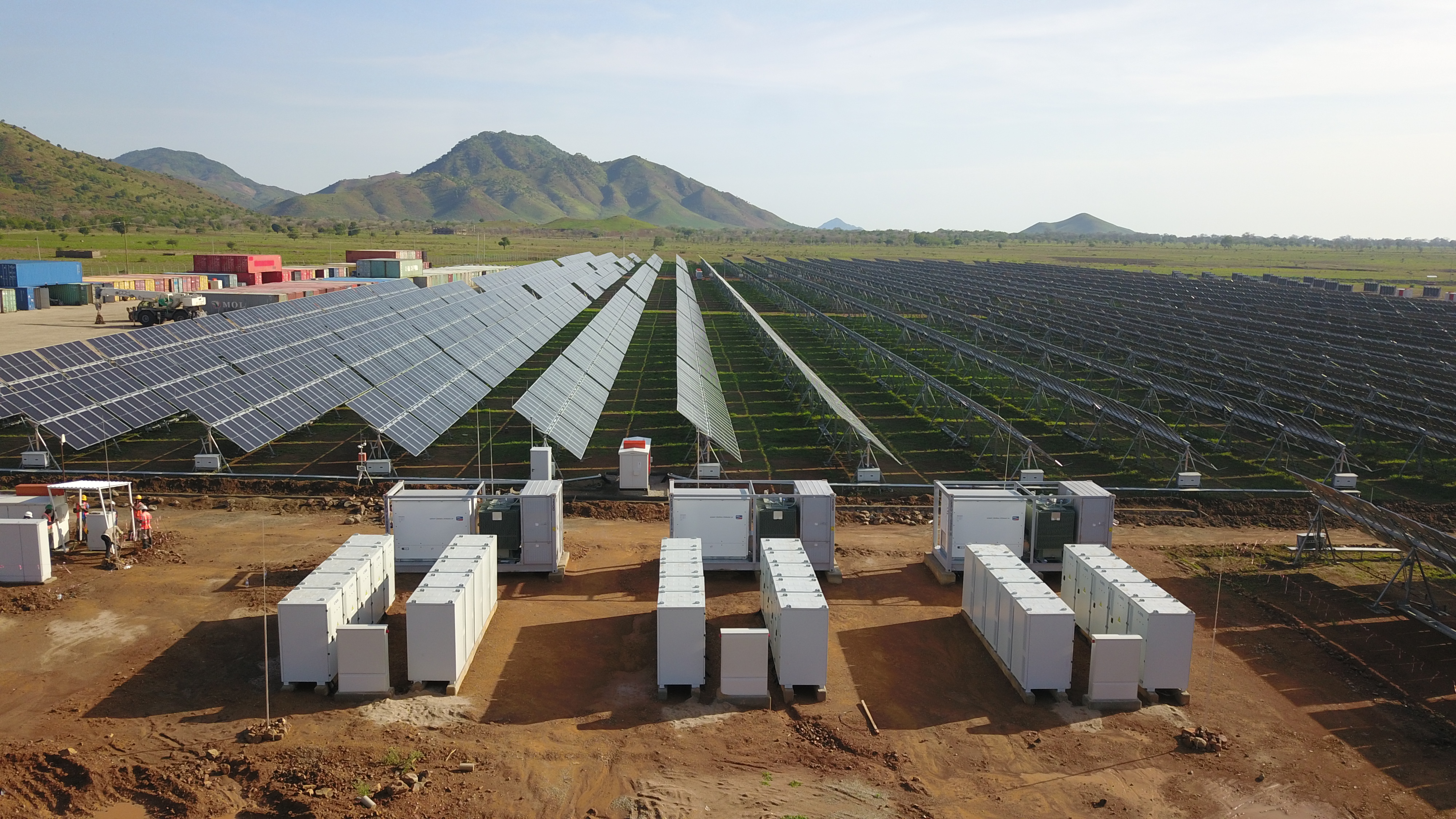
Photo credit: Release by Scatec
How does your approach help Africa meet its energy needs better than more traditional power generation models?
Release by Scatec is a rental-based solution that gives utilities access to solar power and battery systems through simple, shorter-term contracts backed by guarantees provided by the World Bank Group’s political insurance arm, MIGA. We guarantee project financing, as well as construction and operational performance.
This structure helps utilities in financial distress that often cannot take on the costs and liabilities of structuring, tendering, and negotiating a traditional Independent Power Producer agreement (IPP). Think of it as a bridging solution that enables utilities to develop long-term, competitive IPP programs.
Under our “lease-to-own” set-up utilities pay slightly more initially, but costs drop significantly over time, and after 15 years ownership transfers to the utility at no extra cost. Unlike a traditional IPP, this leaves a paid-off asset on their balance sheet.
Our 20–30 megawatt projects can save small utilities more than $10 million a year by reducing fuel imports. Speed matters in realizing these projects across Africa. Working with the World Bank Group through IFC, we have standardized the structure to ensure quick implementation.
In the context of rising climate risks and volatility in global energy markets, how do solutions like yours strengthen Africa’s ability to withstand such external shocks?
Recent years have shown just how volatile global energy markets can be. To build resilience, countries must reduce reliance on costly fuel imports that drain national economies.
Expanding domestic power generation provides greater control, predictability, and self-sufficiency. It also drives local job creation and builds technical and engineering capacity.
At the same time, developing power pools at the regional level is essential. Cross-border transmission improves grid redundancy through several sources of power for back-up in case of failure. It also optimizes the use of renewable energy sources and helps manage the supply continuity challenge that they pose given their intermittent nature.
With solar and battery costs falling, competitive domestic generation is now within reach for all African countries. Through Release by Scatec and other innovators, distributed power plants can deliver reliable, affordable services in the short term, while laying the groundwork for interconnected, resilient regional grids and power pools, supported by much-needed grid and transmission investments.
How are you planning to scale Release by Scatec across diverse African markets, given the varying regulatory, financial, and infrastructure contexts and challenges?
Scalability is built into our DNA. Because we work directly with utilities and governments under their existing generation licenses, land, and permits, we can avoid many of the regulatory complications and delays that slow traditional projects.
Release is funded at the platform level by Scatec, Climate Fund Managers [an investment fund that finances infrastructure developers in the renewable energy, water sanitation, and ocean sectors], and IFC. This eliminates the need for project-by-project financing and allows greater flexibility for capacity expansions. In Cameroon, for instance, we are adding 28 megawatts of solar PV and 19 megawatt hours of storage as a second phase, implemented simply through an amendment to the existing rental contract and financing.
How has Scatec’s experience globally helped it succeed in Africa?
Being part of Scatec gives us access to world-class expertise and a global support network we can mobilize anywhere in Africa. We share offices, infrastructure, and operational systems, and our teams benefit from Scatec’s deep experience in engineering, procurement, technology development, legal, tax, as well as environmental, social, and governance issues. We also draw on Scatec’s global operations monitoring facility in South Africa, which currently supports 45 projects worldwide.
What’s unique is how we’ve adapted this experience to Africa’s realities. Working with the World Bank Group through IFC, we are able to offer a financing and guarantee model that is suited to the needs of smaller, lower-income countries in Sub-Saharan Africa.
What barriers still limit private investment in Africa’s clean energy infrastructure?
The main barrier is counterparty and payment risk. We are comfortable taking on construction risk, but predictable returns are essential to attracting long-term investments. Many utilities are under financial strain, which discourages investors.
Our solution mitigates this through proprietary movable equipment and the guarantee structure provided by MIGA. However, to unlock the full potential of private capital, particularly for mini-grids, we need better guarantee structures from multilateral institutions.
Modular, low-cost solar and battery solutions need to be deployed in volume to help utilities stabilize their finances and reduce risk across the system.
Beyond expanding electricity access and affordability, how do your projects support local economies and communities?
Every Release by Scatec project relies on active community involvement. Depending on the size, the construction phase employs from 100 to 300 people, many of whom are local workers from neighboring villages and communities.
We also conduct training programs with utilities to build knowledge in operations and management, ensuring that local teams can manage systems long after installation. During operation, we rely on local staff for security, maintenance, and many other services. This approach doesn’t just deliver power—it builds skills, strengthens communities, and helps advance sustainable, inclusive growth across Africa.
However, direct job creation is only a side effect. The real impact comes from providing reliable electricity, which serves as the backbone and the enabler for local business to prosper and recruit more people. In North Cameroon, for instance,a local cement factory could get back to full capacity, bringing more than 100 people back to work. Local small and medium-sized enterprises have also significantly increased their production.
Businesses cannot grow in darkness.