

Access to credit — especially for MSMEs — depends on strong credit infrastructure.
Effective systems improve financial stability, enhance credit risk management, and expand financing for underserved groups. Advances in big data, fintech, and other emerging technologies are transforming credit information systems. Credit reporting service providers can now access and analyze large volumes of data more quickly and effectively.
When paired with sound legal and regulatory frameworks, these innovations boost financial inclusion by giving lenders better information and offering borrowers improved credit terms and greater transparency.

The Credit Infrastructure team manages the Global Financial Infrastructure Program (GFIP), a partnership between IFC and the Swiss State Secretariat for Economic Affairs (SECO). The program supports the development of credit reporting systems, secured transactions and asset-based lending, and insolvency and debt resolution, along with the electronic systems and broader ecosystem required to implement them.
GFIP aims to expand access to finance for MSMEs, women-owned businesses, underserved individuals, and, where relevant, corporates through securitization solutions. It also produces global knowledge materials for wider application.
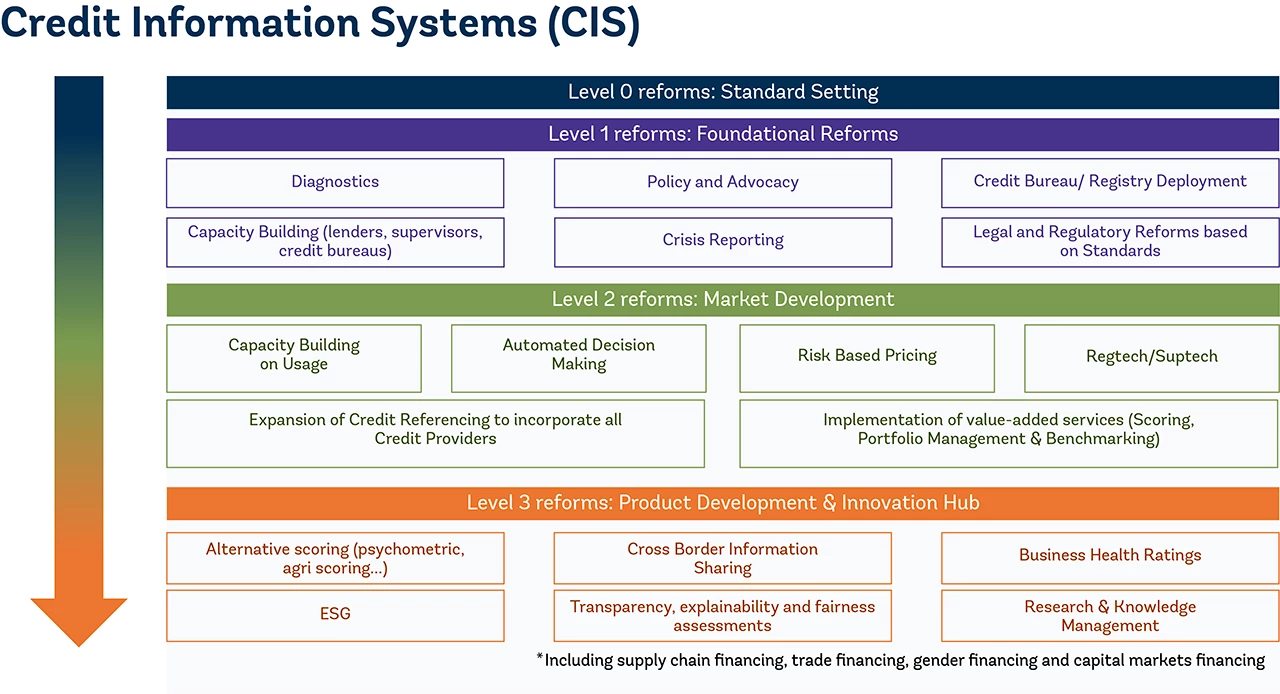
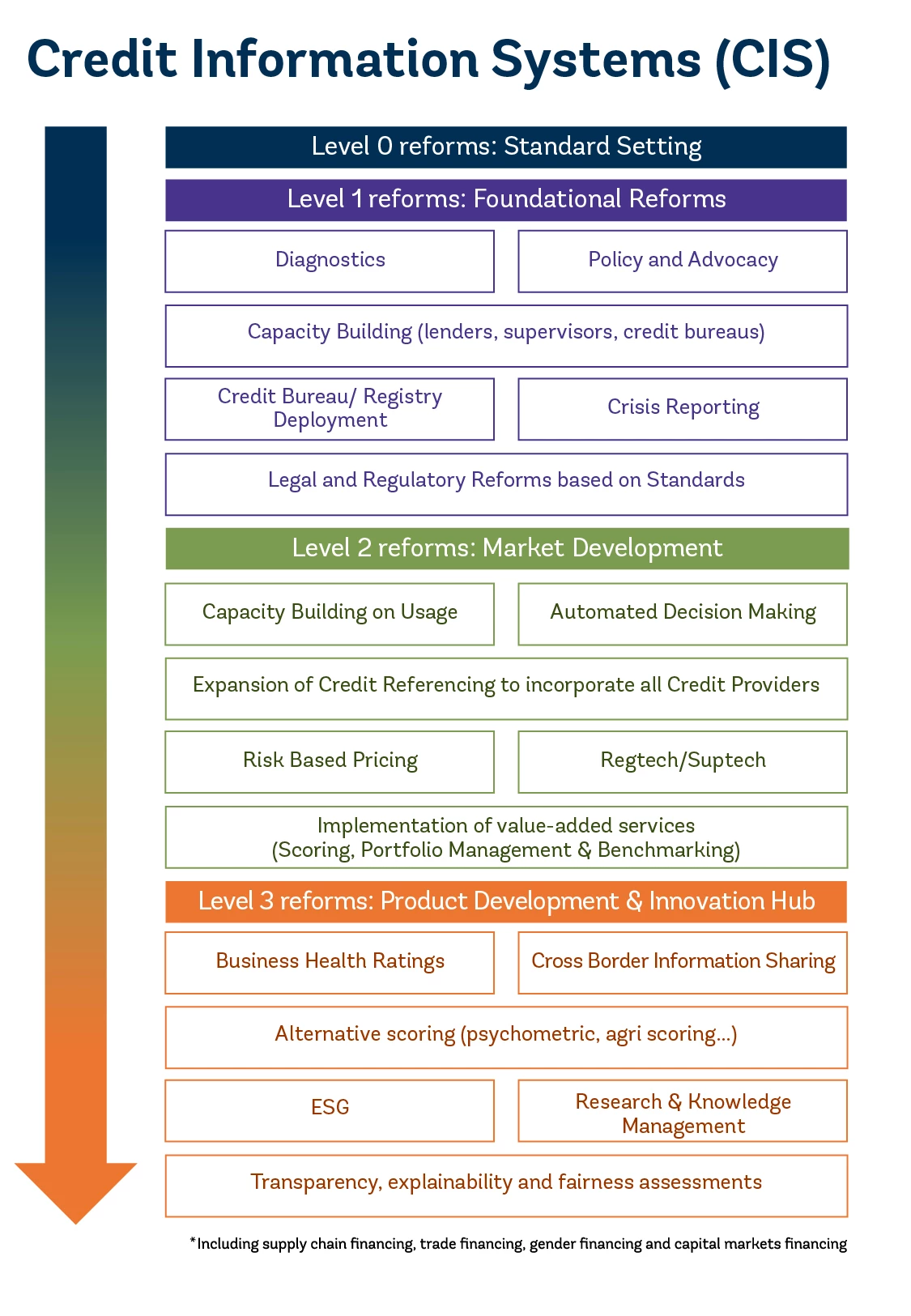
Credit reporting systems are databases of debtor information — covering individuals and businesses — supported by the legal, institutional, and technological frameworks needed for their effective operation. They take three main forms: credit registries, credit bureaus, and commercial credit reporting companies. All rely on strong data analytics to help users identify trends and make informed decisions.
IFC helps governments and stakeholders establish or reform credit reporting systems in line with international standards, with the goals of expanding responsible access to finance and supporting financial stability.
Technical Assistance
Our work focuses on building the capacity of authorities, service providers, and users to create efficient, safe, and reliable systems. This includes developing national CRS strategies, establishing legal and regulatory frameworks, improving data availability — especially digital data — and strengthening consumer awareness and protection.
We conduct and share research on topics such as data protection, consumer protection, financial inclusion, supervision, analytics, and digital finance. Our work includes:
- Training authorities and CRS participants
- Organizing global and regional conferences and workshops
- Monitoring CRS environments in 180+ countries
- Developing guidelines and conducting assessments and surveys
- Facilitating knowledge exchanges across jurisdictions
- Exploring links with other credit infrastructure areas, including secured transactions and insolvency
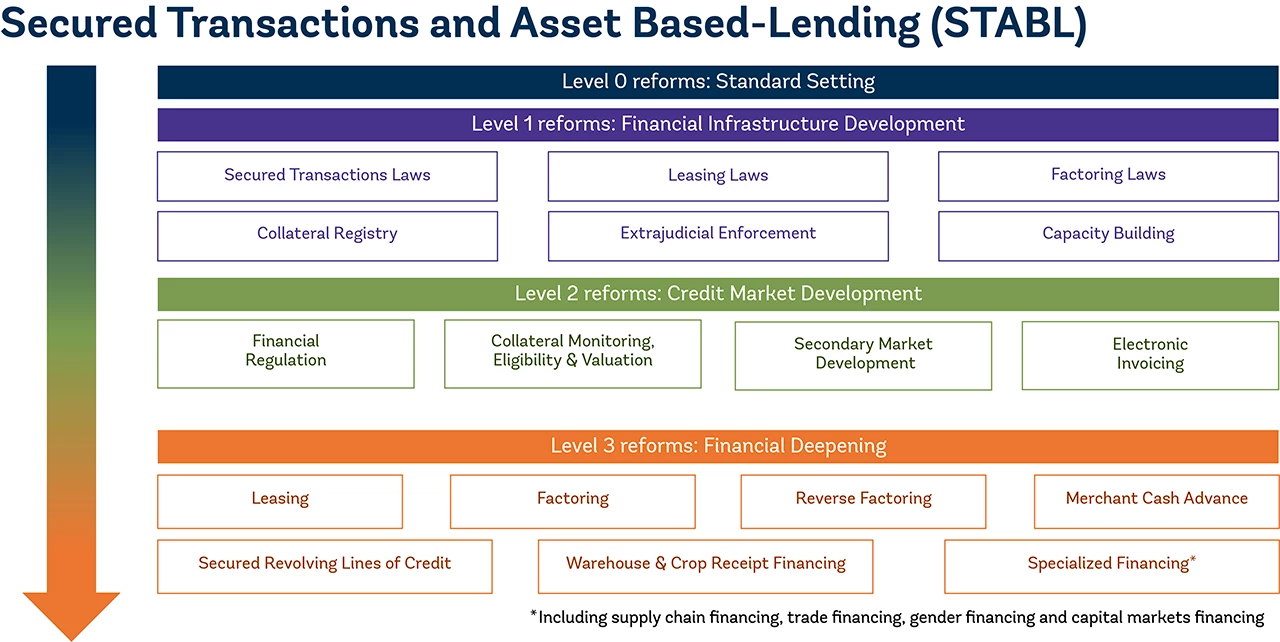
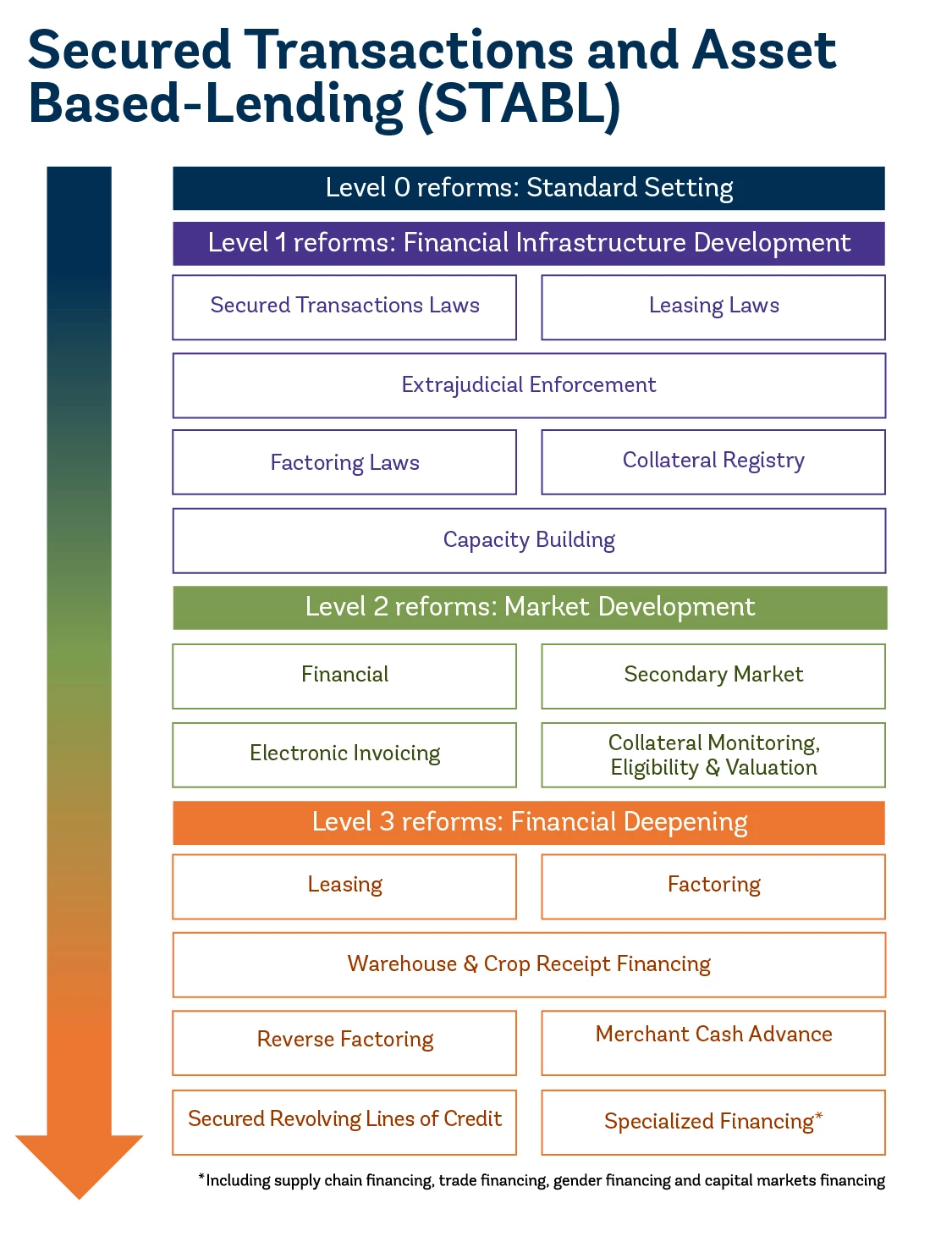
Modern secured transactions laws and collateral registries play a critical role in economic development. While land and buildings are commonly used as collateral, many countries lack the legal and institutional frameworks needed to support lending against movable assets — such as inventory, receivables, crops, and equipment — which limits access to finance.
Reforming movable collateral frameworks enables businesses, especially MSMEs, to unlock capital for investment and growth. Modern registries increase the availability of credit and help lower borrowing costs.
We help governments create effective legal and institutional frameworks that support the use of movable assets as collateral. This includes modernizing legislation, building electronic registries, and strengthening stakeholder capacity.
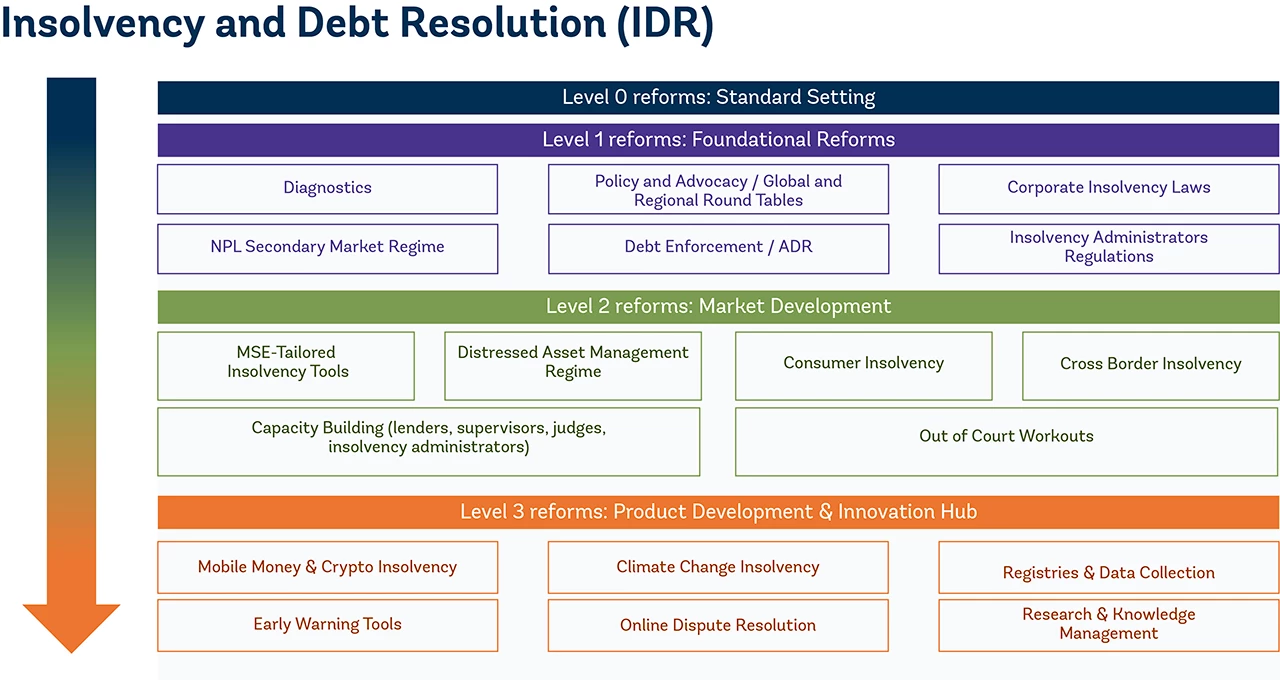
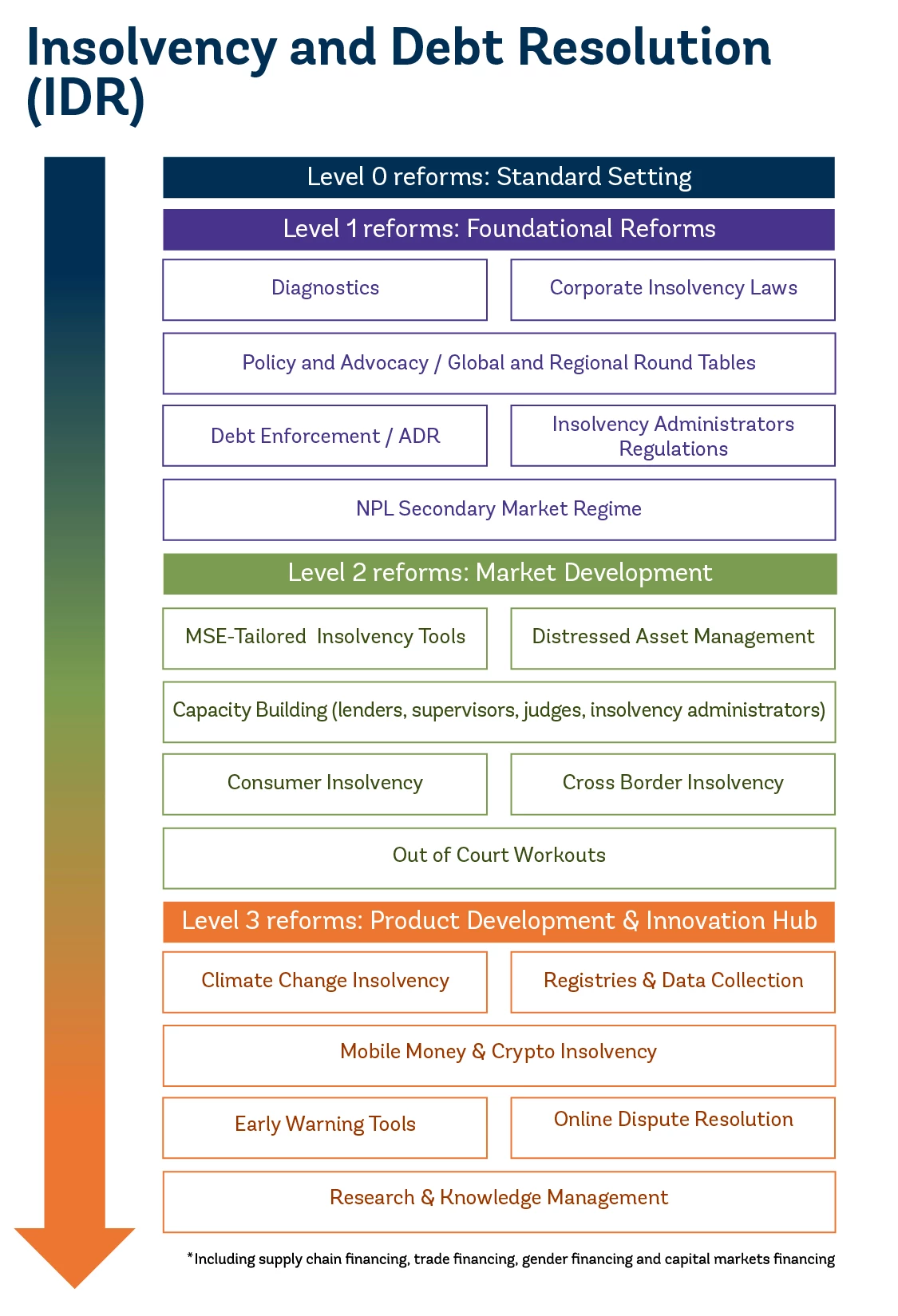
The World Bank Group works to improve insolvency and debt resolution frameworks in emerging markets as part of its broader mission to promote private sector development.
In the insolvency and debt resolution sphere, the IFC’s efforts typically focus on:
- Strengthening legal and institutional frameworks for corporate and individual insolvency, ensuring predictable, transparent, and fair processes.
- Advising governments on reforming insolvency laws and regulations to align with international best practices.
- Capacity building for courts, regulators, insolvency practitioners, and other stakeholders to handle restructurings and liquidations efficiently.
- Supporting out-of-court workout mechanisms and early resolution tools to help businesses restructure debt before formal insolvency.
- Promoting creditor rights and balanced debtor protections, fostering confidence among lenders and investors.
- Encouraging development of professional insolvency practitioner networks and registries.
The aim is to reduce the costs and time involved in resolving distressed assets, preserve viable businesses and jobs, return value to creditors, and ultimately improve the investment climate by making capital recovery more efficient and predictable.
Emerging technologies — such as big data, fintech, cloud computing, distributed ledger technology, and AI — are reshaping credit reporting. They allow credit reporting service providers to process larger, more diverse data sets more quickly and efficiently, creating opportunities for innovation but also raising questions about cost, models, and regulatory requirements. IFC helps markets manage both the opportunities and risks of these technologies while continuing core credit reporting reforms.
Key areas of IFC support:
- Technology innovation: Diagnostics on technology readiness; tools and roadmaps for adoption; guidance on vendor selection; and support to regulators in creating enabling environments for proven technologies.
- Global knowledge: Research on key emerging technologies, their use cases, prerequisites, challenges, and cost-benefit considerations.
- Alternative data: Assessing alternative data landscapes; supporting legal and regulatory reforms; piloting models to test predictiveness; and building capacity on data management and innovative scoring, including a global toolkit for replication.
- Regulation Technology / Supervision Technology: Mapping supervisory needs and opportunities; supporting development of RegTech/SupTech and APIs for automated reporting; piloting solutions; and training supervisors and market participants, with guidance materials on best practices.
- Automated platforms and predictive risk/management tools for industries such as agriculture: Diagnostics and market assessments for agri-finance; development of psychometric tools and digital platforms; and capacity building for financial institutions.
- Cross-border credit information sharing: Diagnostics and support for customer-centric data-sharing platforms; piloting cross-border sharing within a regional bloc; and developing global guidelines through the ICCR.
Insights & Reports

Contacts
Last updated: December 2025