
 Photos by Marisa Zawacki
Once a novelty, a financial tool known as securitization gains traction to support small and medium enterprises in West Africa
-
17.9KTotal jobs expected over 5 years
-
$25MIFC investment in Benin bond for SME loans
By Roger Atwood
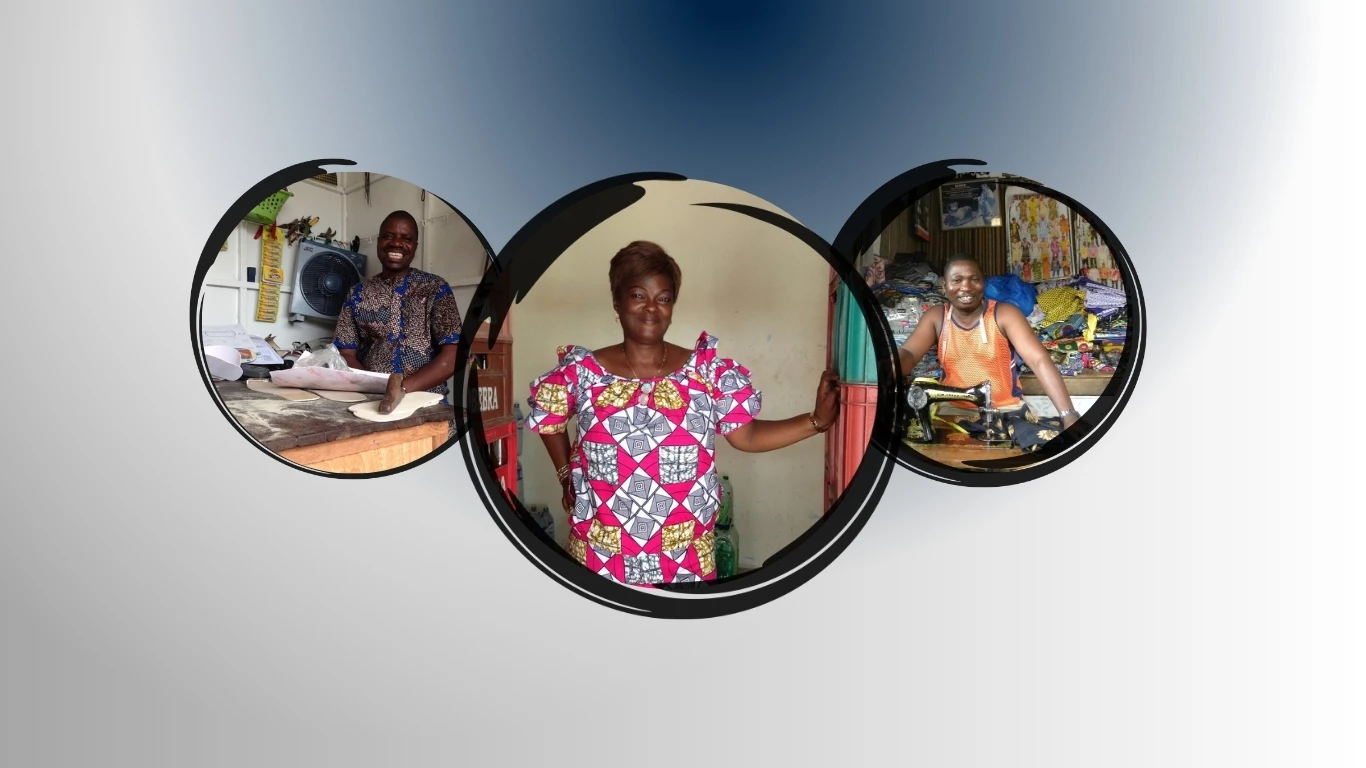
They make up more than 90 percent of businesses in West Africa, serving customers in everything from fast food to construction. Yet the region’s small- and medium-enterprises, or SMEs, often lack the financing they need to grow, generate jobs, and realize their potential.
Since 2020, securitization—a complex though increasingly commonplace financial process—has become an important tool used by financial and non-financial institutions. It helps them diversify funding sources, extending credit to SMEs in the eight countries of the West African Economic and Monetary Union (WAEMU).
Put simply, banks bundle assets or “receivables” with predictable cash flow such as loan repayments or utility bills and sell them to a special-purpose vehicle, or SPV, that will issue a tradable security or bond backed by these assets, sometimes wrapping in other credit enhancements. The bond will then be sold to institutional investors, with the funding raised flowing back to the bank which will lend it to SMEs.
Significant barriers remain to building the region’s local-currency capital markets. Yet, monitored by the regional regulatory entity AMF UMOA, securitization is starting to mobilize serious money for SMEs and employment.
“Capital markets are diversifying and expanding in West Africa,” said John Gandolfo, IFC Vice President and Chief Financial Officer. “Securitization offers an entry point for SMEs to gain a larger stake in the economy and in their own future, giving them the potential to add jobs and expand.”
The World Bank Group’s Joint Capital Markets Program (J-CAP) has played a key role in generating the conditions for securitization and other innovative financial tools to flourish in WAEMU, following years of work with regulators, financial institutions, and investors. J-CAP works in about 20 countries around the globe to promote local-currency capital markets for financing development priorities such as affordable housing, decarbonization, and major infrastructure – and promoting small businesses to boost employment and sustainable growth.
Since the first securitized bond transaction in the subregion, in 2018, which J-CAP helped enable, about a dozen have followed. They are opening new financing opportunities for SMEs that once relied on family and friends for credit.
“There is a whole ecosystem for innovation developing in finance in West Africa. Securitization is part of that,” said Mazen Bouri, a Dakar-based Lead Financial Sector Specialist for the World Bank and J-CAP’s team leader in WAEMU. “It’s based on looking at assets, repackaging them, and then bringing in liquidity to address demand for financing. It’s reaching down into the market and injecting liquidity into these [banks’] balance sheets so they can then lend to smaller clients.”
Securitization, a tool for attracting private capital for development in emerging markets, took a major step forward in West Africa in July 2025, when NSIA Banque Benin and an SPV created by the West African Development Bank (BOAD, its acronym in French) and known as Keur Samba issued a local-currency, securitized bond worth 52 billion West African francs, or about $90 million. The issuance benefits SMEs in Benin, Senegal, and Togo – with 25 percent reserved for women-led SMEs and micro-enterprises and 10 percent for climate projects. Completed with J-CAP’s technical advice, it was the first such securitization in Benin and one of the largest yet in WAEMU.
Anchor investments from IFC, BOAD, and British International Investment, the UK’s development finance institution, accounted for a combined 87 percent of the Benin bond’s main tranche of 34 billion francs, or about $60 million. Those investments signaled confidence in the subregion’s capital markets and emboldened local investors to join. Overall bond issuances in WAEMU rose 87 percent in the first half of 2025 to 6.9 trillion francs, about $12.5 billion, over the same period in 2024.
IFC, which invested $25 million in the Benin bond and set conditions for the use-of-proceeds loans to SMEs, estimates the increase in lending from the transaction will create up to 17,900 jobs over five years, with up to 3,900 created by SMEs and 14,000 indirect and induced jobs.
Banks want to expand into the dynamic, customer-focused SME sector yet remain wary of the risk exposure that comes with it.
“Companies were saying, we want to finance these projects, but we need a more strategic way of financing them. This is where securitization comes in. It offers a happy medium between buying shares and investing in a bond,” said Adji M’Baye, Managing Director of BOAD’s securitization unit, BOAD Titrisation.
Compared to ordinary bonds or bank loans, securitized bonds can be based on a much wider variety of assets and investors, said Dior Mboup, IFC Associate Financial Officer for Client Solutions and Structuring.
“Securitization creates a product that almost everybody can invest in,” said Mboup, who is based in Dakar. “You might have a finance company with a financial statement that is not great, but they have a healthy pool of assets. So you can separate them from the balance sheet and […] use them to raise money at a cheaper cost because of the securitization.”
Along with new opportunities, the drive into securitization has opened new challenges. Issuing institutions have had to learn about areas of the economy with unfamiliar risk profiles and business practices.
“To do securitization, you need to find the right assets,” said Oualid Ammar, IFC Principal Financial Officer at Client Solutions and Structuring in Dakar. “The SMEs must have the right yield, risk profile, and diversification. They need to generate enough cash to pay the bond.” Still, securitized bond issuances are reaching the point in West Africa where they gain enough momentum to become “scalable,” growing in volume and number, and in the variety of development goals they address, said M’Baye. “It’s not about having one transaction and moving on,” she said, “but about setting targets – households you want to finance, SMEs to fund – and then making […] strategies to reach them.”
J-CAP’s work in WAEMU is currently supported by the government of Germany. Globally, J-CAP is supported also by the governments of Switzerland, Japan, Australia, Luxembourg, and Norway.
Published January 2026