
 These green circles mark large-scale center-pivot irrigation projects transforming arid land into productive farmland. Backed by infrastructure investment and water access from dams like Foum Gleita, these irrigation systems are a cornerstone of Mauritania’s agricultural modernization. Photo: APIM.
Africa holds abundant natural resources, a fast-growing workforce, and homegrown capital. But unlocking those strengths depends on something less visible: rules and institutions built around fairness, efficiency, and predictability. Without these, private investment stalls, no matter how promising the fundamentals.
For Mauritania—a vast country rich in minerals, fisheries, and renewable energy potential—the answer lay partly in its legal framework. Outdated structures were blocking private capital from flowing into high-potential sectors like agribusiness, renewable energy, and infrastructure, leaving them chronically underdeveloped.
Key Statistics
-
$402 BFinancing gap Africa must bridge by 2030
-
939Direct jobs expected from these newly approved projects
A Collaborative Effort to Transform the Investment Climate
In February 2025, the government responded with a sweeping reform package designed to modernize the country's legal and regulatory environment and unlock the full potential of its private sector. Since July 2025, a total of 19 investment projects have been approved under the Investment Code 2025, representing a declared investment volume of approximately USD 120 million and an estimated 939 direct jobs.
At the request of Mauritania’s Ministry of Economy and Finance, IFC supported this important transformation, analyzing the existing investment code as well as investment incentives. Key issues included unclear market access, complex procedures, weak investor guarantees, and the removal of free zones and tax-exempt areas. These gaps highlighted the need for reforms to strengthen legal certainty, investor protections, and alignment with global standards.
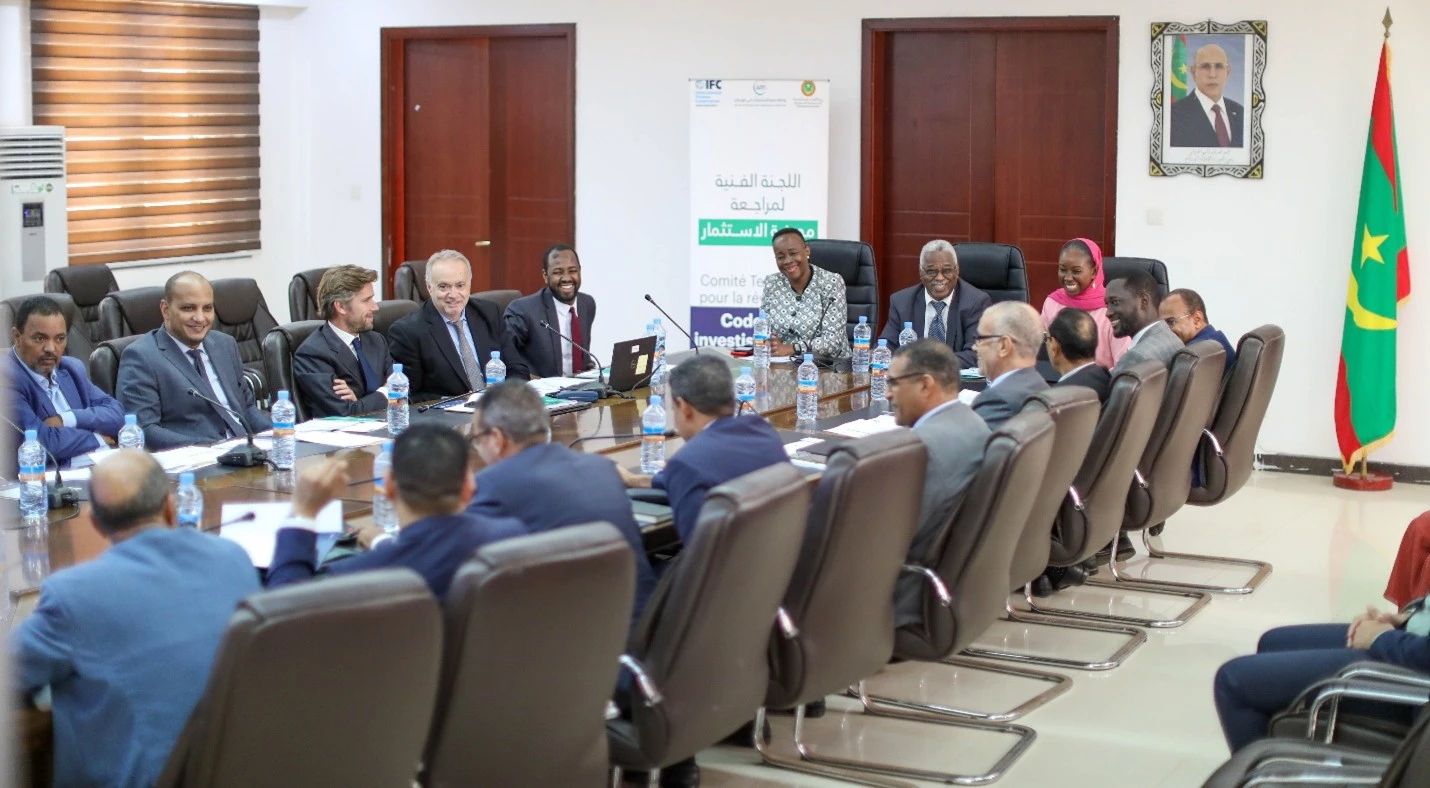 The technical committee for the revision of the Investment Code, comprising the technical ministries involved in the Investment Code. Photo: IFC.
How the New Investment Code Strengthens Investor Confidence
“It was important for us to stand alongside the Government of Mauritania, pairing global expertise with local priorities, to help design a clear, transparent and predictable policy framework that attracts private-sector investment and turns potential into jobs,” said Sylvain Kakou, Senior Manager for the Sahel at IFC.
In collaboration with the World Bank and IMF, IFC helped revise the Code and draft a new Investment Policy Letter. The reforms create a more transparent, predictable investment climate to boost investor confidence and enhance Mauritania’s appeal for private sector investment. This includes streamlined procedures, clarified investor protections, and laws that align with international best practices.
The new code also strengthens institutions, including the Investment Promotion Agency of Mauritania (Agence de Promotion des Investissements en Mauritanie, or APIM), which helps attract and retain investors. Finally, the code identifies and promotes opportunities in Mauritania’s most promising sectors to provide a pipeline of high-quality projects that could attract investment and contribute to economic growth and jobs.
What Incentives Does the 2025 Investment Code Offer Businesses?
The Investment Code 2025 introduced tax incentives to support businesses looking to establish a foothold and scale their activities in Mauritania.
“The new Investment Code aligns with international standards to serve all types of projects.”
– Aïssata Lam, Former Director General of APIM
For example, businesses making investments between $50,000 and $750,000 will pay only a 3 percent import tax on equipment and receive training tax credits of up to $5,000 per year. Commitments between $750,000 and $5 million will pay a 5 percent import tax on equipment, reduced VAT, and be eligible for up to $10,000 in training credits
Measurable impacts are expected to materialize over the next three to four years, as the country gradually transitions from a commerce-based to a manufacturing-oriented economy. While the full effects of these reforms will take time to assess, early results are already visible, including new projects and the creation of almost one thousand jobs. These early outcomes suggest that the revised Investment Code has strong potential to mobilize private sector investment and support structural transformation.
“This is more than just a legal update—we hope this is the beginning of a new economic era,” said Maiko Miyake, Country Advisory and Economics Manager, IFC. “It was built with extensive input from the private sector, and it has the potential to deliver strong results. Before, there were too many gray areas for investors. Now, the rules are clear, streamlined, and investor-focused.”
A Step Toward Long-Term Economic Resilience
For Moustapha Maouloud, Technical Advisor in charge of Business Climate at APIM, the reform offers much-needed clarity and stability: “A complete revision of the Investment Code made it possible to harmonize the tax regimes contained in the Code to enhance its attractiveness. It also simplified administrative procedures for faster processing of applications. Additionally, this reform expanded the eligible sectors to increase investment opportunities. Finally, it provided more guarantees and a more stable legal framework for investors.” (L’Economiste, June 2025)
These sentiments echo the overarching goal of the reforms: to create a stable, predictable, and attractive investment environment where investors feel confident committing their capital. This not only benefits investors but also contributes to job creation, economic diversification, and resilience—essential for Mauritania’s long-term growth. The reform also helps strengthen the investment framework by embedding sustainable development as a policy objective and requiring environmental impact studies for eligible projects, helping ensure that investment promotion is better aligned with environmental and social oversight
Looking ahead, sustained progress will benefit from close coordination among relevant institutions and efficient, well-sequenced decision-making. This collaboration will help ensure that the Code’s objectives are translated into lasting results that further strengthen the investment climate.
“The 2025 revised Investment Code marks a defining milestone in Mauritania’s ambition to build a transparent, predictable and competitive investment environment. By strengthening legal certainty, enhancing investor protection and aligning incentives with international best practices, it lays the foundation for sustainable, high-impact and value-creating investments across our priority sectors. On behalf of the APIM family, I extend our sincere appreciation to IFC for its financial and technicalsupport. IFC’s partnership has been instrumental in delivering this strategic reform and in strengthening investor confidence in Mauritania’s business climate.”
—Dr. Tah Ahmed Meouloud, General Director of the Mauritania Investment Promotion Agency (APIM)
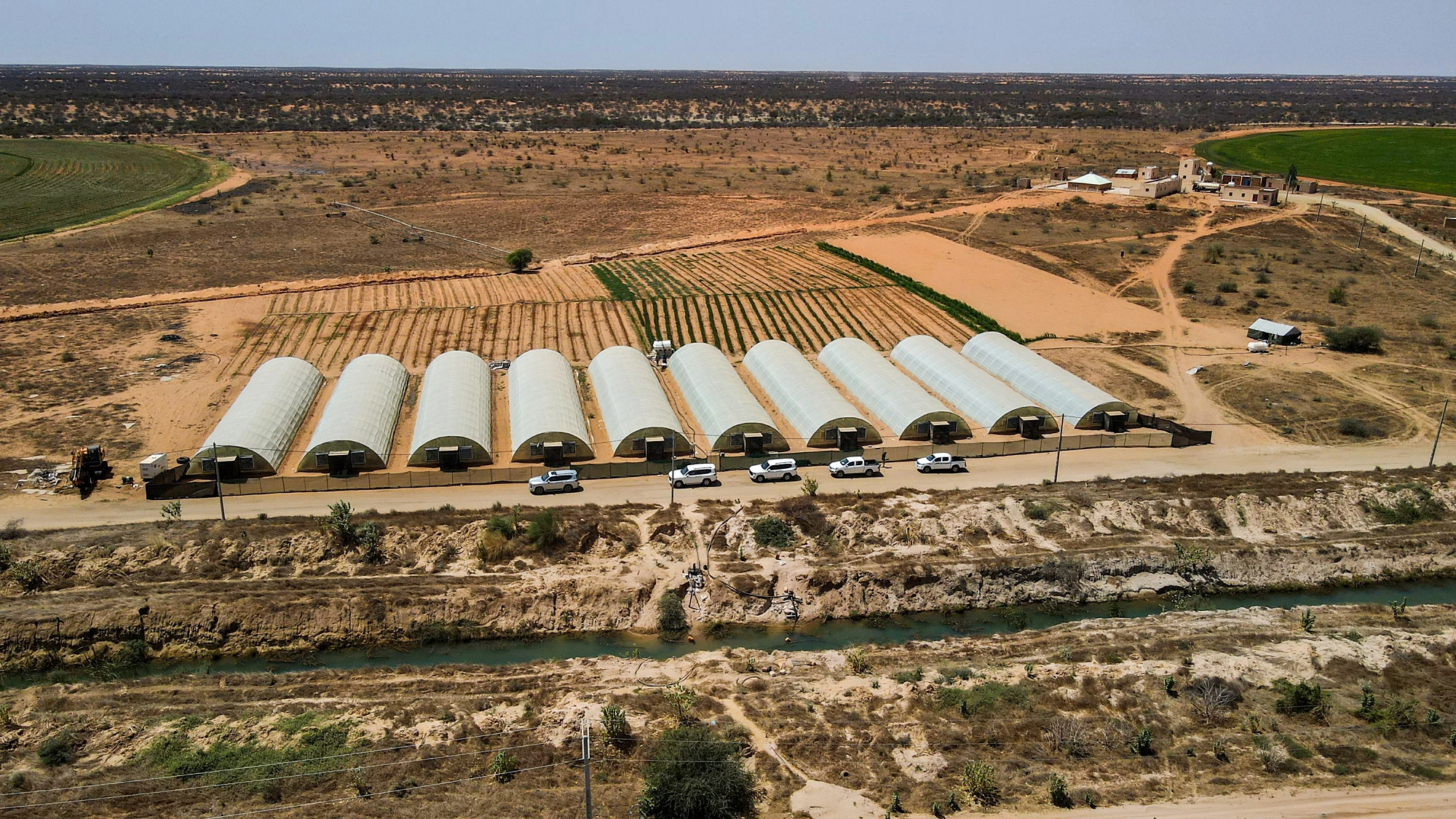 Modern greenhouses in Mauritania demonstrate the country’s growing agribusiness sector, supported by targeted infrastructure and private investment. These facilities are helping to increase food production, reduce import reliance, and create new rural employment opportunities. . Photo: APIM.
A New Era for Mauritania’s Economy
With this new legal framework in place, Mauritania is well-positioned to attract increased investment. Once fully implemented and operational, the Investment Code 2025 is expected to strengthen investor confidence and serve as a catalyst for economic diversification and job creation for years to come.
This reform was a joint effort, closely coordinated with the World Bank Group and the IMF to ensure technical alignment on regulatory and fiscal reforms. Drawing on the World Bank Group’s role as a Knowledge Bank, the collaboration ensured that global best practices were tailored to Mauritania’s context and embedded into practical, investor-ready implementing regulations. On the government side, the project was led by the Ministry of Economic Affairs and APIM, with strong engagement from line ministries and regular consultation with the private sector, ensuring local ownership and relevance.