

By Sara Aggour
For Pamela Kassouf, a busy working mother with five children under the age of five, flexibility means everything.
Pamela is a business manager for the Holdal Group, a Lebanon-based retail, distribution, manufacturing and supply chain company, that prides itself on supporting families. For Kassouf, this means having access to flexible hours, remote working options, and permission to bring her baby daughter to the office while breastfeeding.
Without Holdal Group’s flexible policies, Kassouf says, continuing her career would have been impossible.
“Imagine if the company didn’t have those policies in place,” she says. “I am a very career-driven person, but I might have felt too overwhelmed and cut down to a part time job or left my career.”
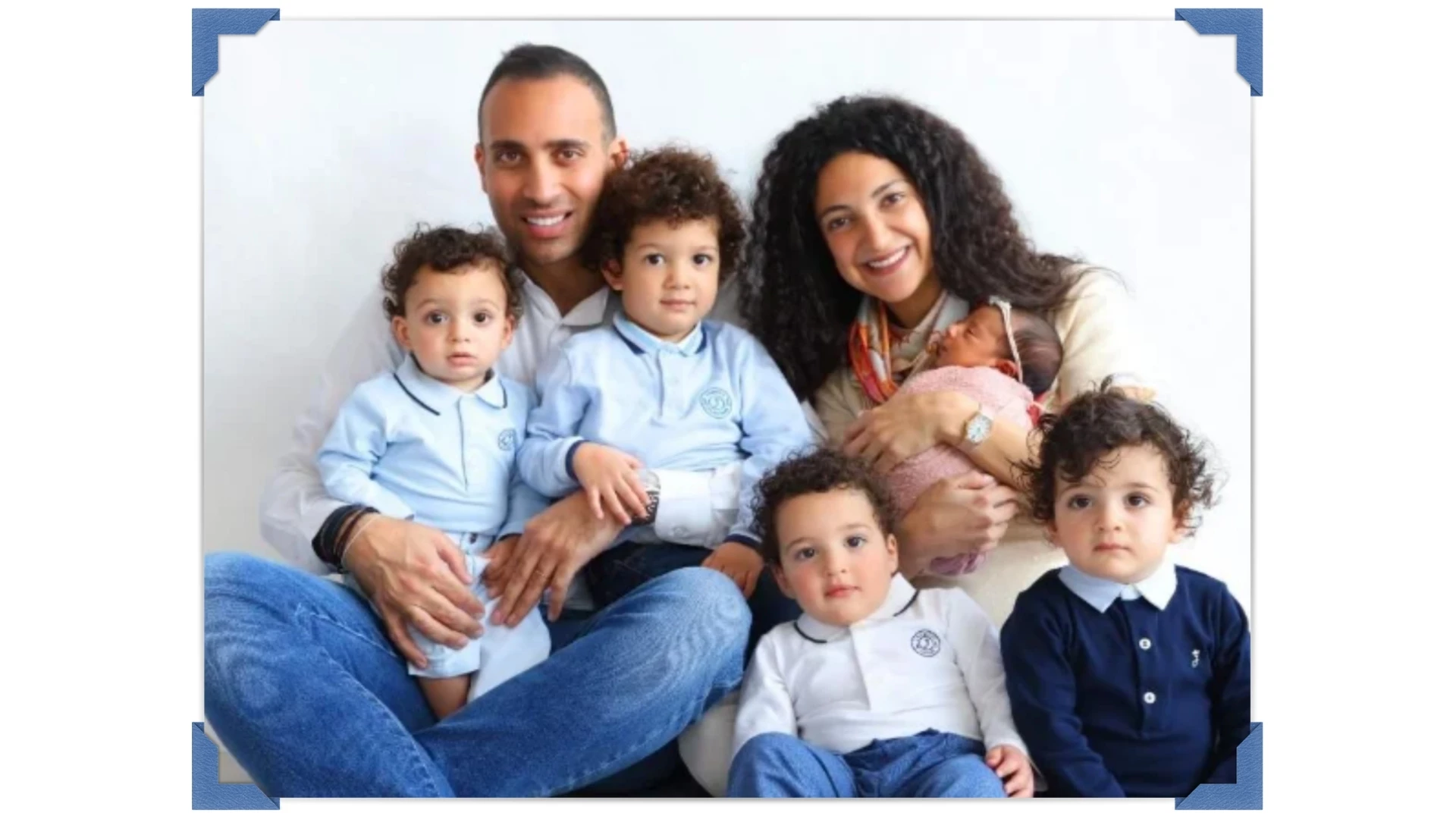 Holdal Group’s Pamela Kassouf with her family. Photo shared by Pamela Kassouf.
Holdal Group was already a strong, family-centered place to work but, thanks to the Care Arabia Program, a pioneering World Bank Group initiative launched in 2024 in Lebanon and Jordan, the company is now pursuing more forward-looking ambitions. The program, spearheaded by the World Bank Group’s private sector arm, IFC, and supported by the World Bank’s Mashreq Gender Facility in partnership with the governments of Canada, the Netherlands, and Norway, helps women stay in the workforce by strengthening the childcare ecosystem holistically and working with employers, childcare providers, and financial institutions.
Care Arabia, which concluded in August 2025June 2026, works directly with 18 companies, encompassing more than 10,000 employees, of which over 4,000 are women, across Jordan and Lebanon to create family-friendly workplaces that empower both parents and caregivers. It also supports 50 childcare service providers in Jordan, mostly owned and operated by women, to access finance, improve service quality, and scale their businesses.
For Maissa Abou Adal Ghanem, Holdal’s Chief Sustainability Officer and board member, participating in Care Arabia has given the company’s leadership a “baseline for success.”
“After joining the program, we knew exactly where the needs and gaps were,” she says.
Better Childcare Means Better Jobs
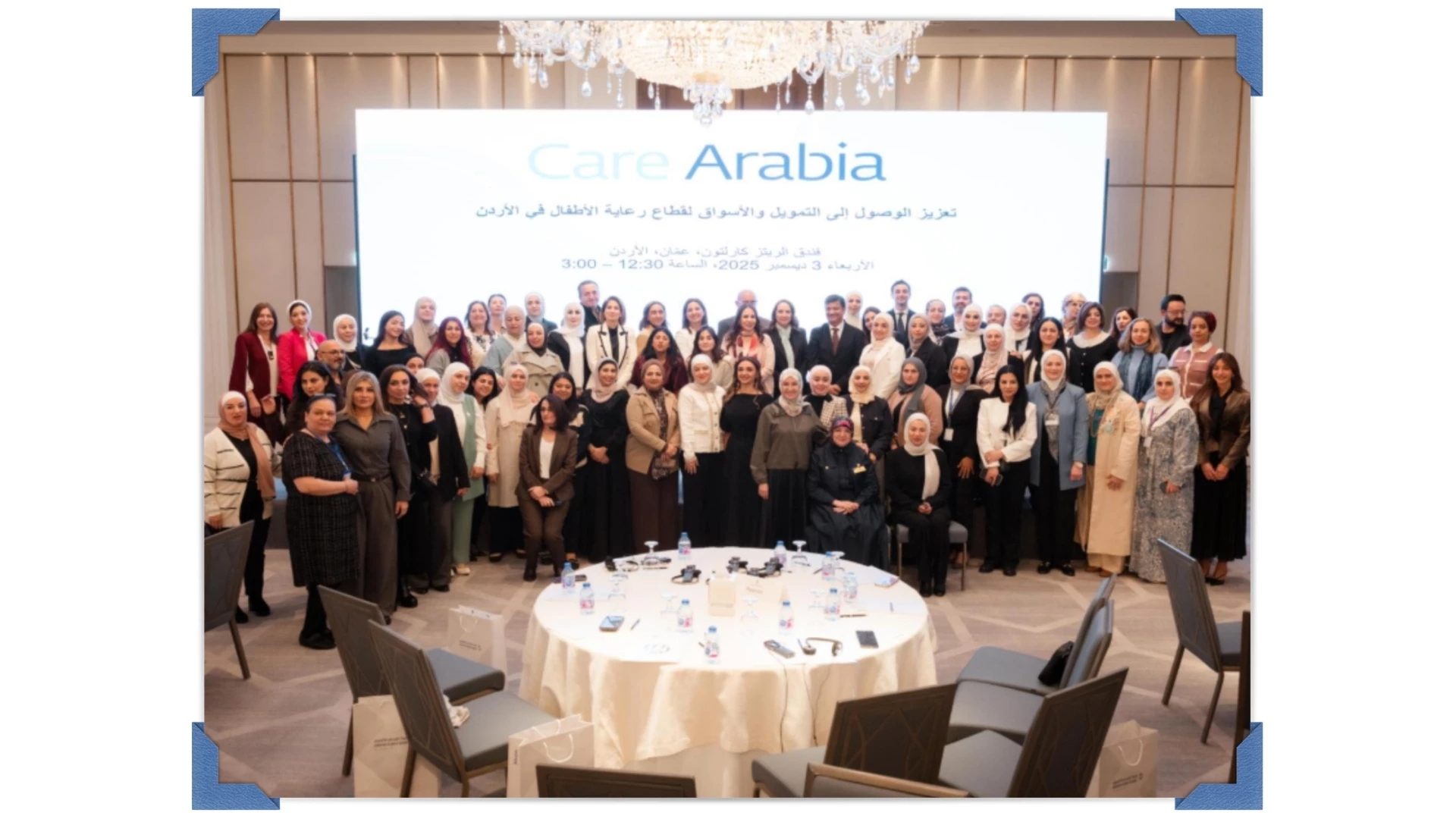 Closing of the Care Arabia event in Amman, Jordan. Photo: World Bank Group
In a world confronted by a staggering jobs gap—over the next decade 1.2 billion jobs in developing countries are needed—women face greater challenges.
In Jordan and Lebanon, where female labor force participation is among the lowest globally, the gap is especially stark. Despite high levels of education in both countries, persistent barriers limit access to jobs, career progression, and retention. In Jordan, fewer than 15 percent of women are employed or actively seeking work, while in Lebanon, the figure stands at just 26 percent.
These low rates of female employment are exacerbated by a lack of childcare services. In Jordan, less than 3 percent of children under the age of five are enrolled in formal childcare services, forcing mothers to opt out of the work force to care for their young children.
Addressing this gap can boost women’s participation in the workforce by more than 7 percent in both Jordan and Lebanon. According to a recent World Bank report, one way to enable more women to enter the workforce and support job creation is by meeting the regional demand for childcare services. Proper childcare services not only support early childhood development but also enable parents, especially women, to work.
Under Care Arabia’s direction, Nafith Logistics, a leading Jordan-based logistics, supply chain and storage company, is helping ensure that female employees are not forced to choose between their families and careers, says Nourah Mehyar, the company’s CEO and co-founder.
Nafith Logistic’s new workplace policies include a nursery reimbursement program and paid family leave. The leave policy adds six additional paid days, a nearly 50 percent increase on Jordan’s standard 14-day annual leave, while the nursery program offers a monthly allowance for employees with children up to the age of five.
Connecting Providers to Finance
 Rana Jaradeh, Small and Medium Enterprise Product Development Manager at Jordan Kuwait Bank. Photo shared by Rana Jaradeh.
Care Arabia also connects childcare providers to financial institutions, enabling them to access much-needed financing. Under the program, IFC is partnering with Jordan Kuwait Bank (JKB) that has developed bespoke solutions specifically tailored for childcare providers.
Rana Jaradeh, a manager at Jordan Kuwait Bank (JKB), understands that many first-time women entrepreneurs, especially childcare service providers, lack credit history.
To meet this gap, the bank designed a tailored, collateral-free loan for childcare businesses. “We introduced a no-collateral loan to make it easier for nursery owners to access financing and grow,” Jaradeh says.
Now, as part of its role in Care Arabia, JKB has helped childcare service providers access loans and grants totaling nearly $100,000. Two childcare service providers have benefited directly from the product, in addition to two other providers who were awarded small grants through a competitive process held during Care Arabia’s closing ceremony.
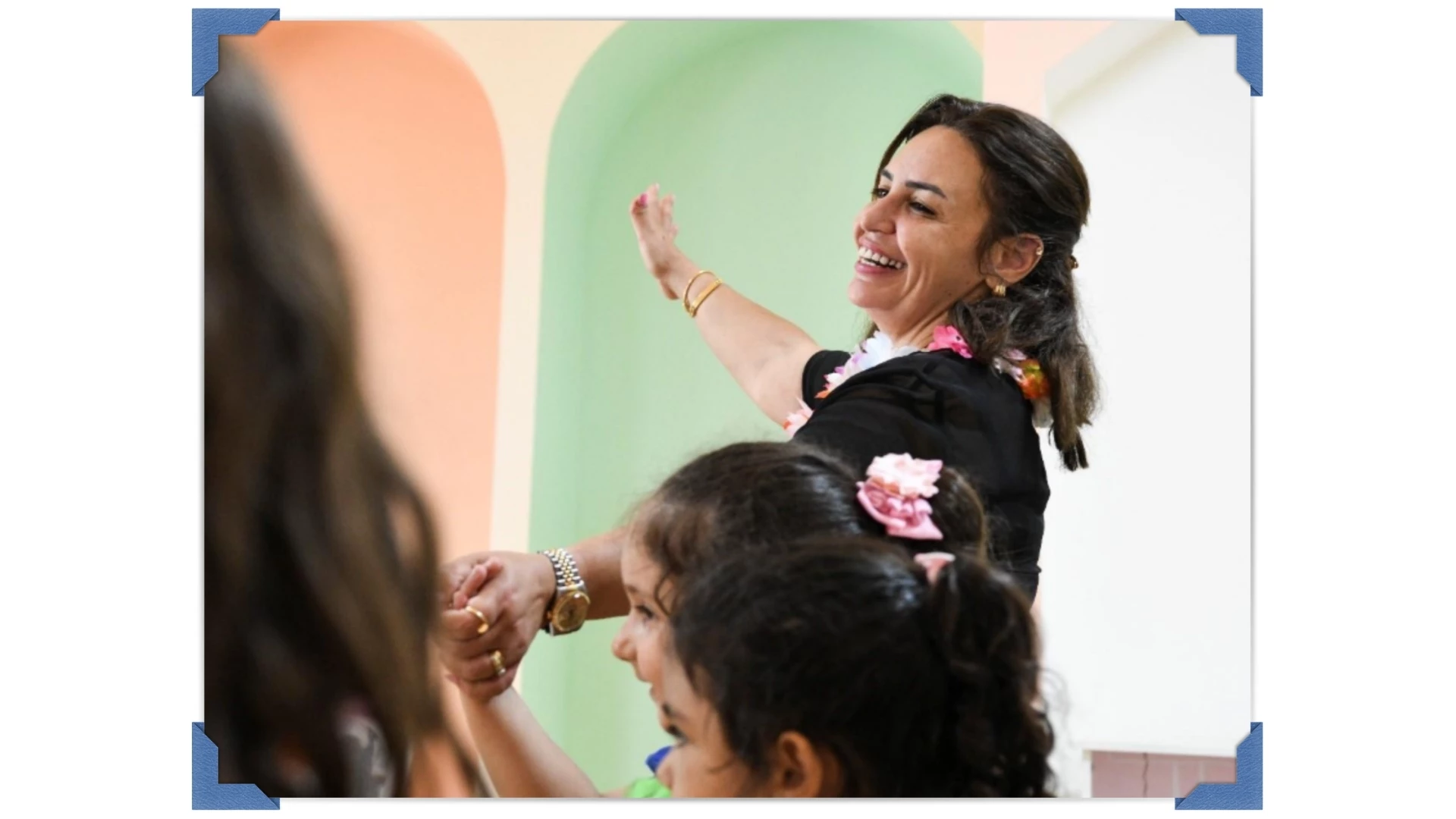 Niveen Al Masry, founder of Al Intilaka. Photo by Nadia Bseiso.
One of these service providers is Al Intilaka, founded by Niveen Al Masry, who says that Care Arabia’s advisory services for childcare service providers helped improve her business. After training from Care Arabia, she hired a full-time accountant to help build a clear budget.
Her commitment has paid off. With Care Arabia’s support, Al Masry’s nursery has now secured a loan from Jordan Kuwait Bank, which she plans to use to open a new branch, enabling more women to stay in work.
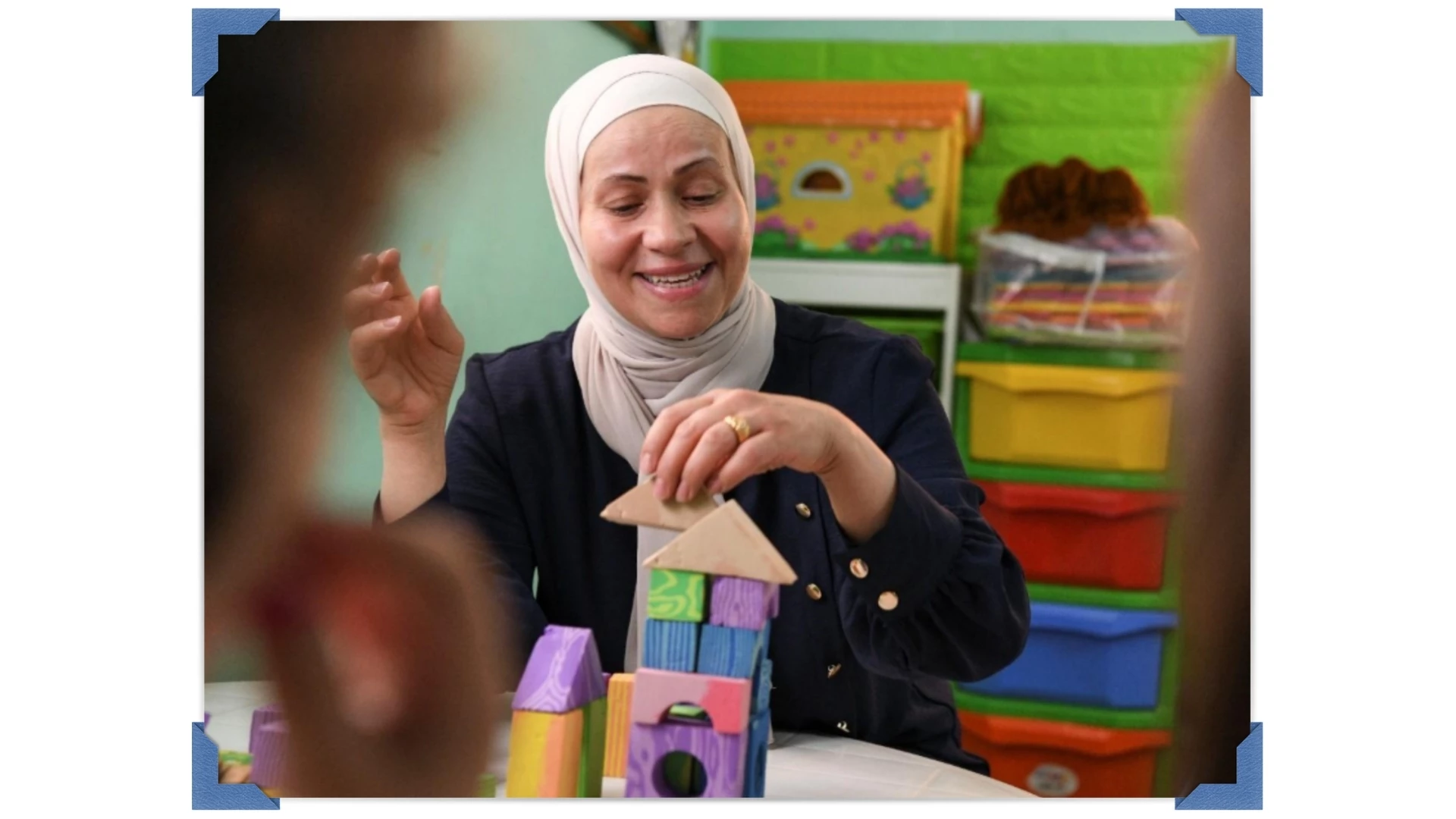 Manal Tabaza, Manager of Jordan’s Rainbow Nursery. Photo by Nadia Bseiso
Rainbow Nursery, managed by Manal Tabaza, is another childcare service provider directly benefitting from Care Arabia. The nursery signed an agreement with Jordan’s Microfund for Women (MFW), a Care Arabia participant and microfinance institution that employs 800 people and supports female entrepreneurs.
The agreement will enable MFW’s employees to enroll their children at Rainbow Nursery at discounted rates, offering a meaningful solution for both the nursery and MFW’s working mothers.
Through Care Arabia, the World Bank Group is helping strengthen the childcare ecosystem across Lebanon and Jordan, contributing to better outcomes for early childhood development, and yielding better workplaces for women to work.
Pamela Kassouf of Holdal Group in Lebanon is experiencing this firsthand. Thanks to Holdal’s partnership with Care Arabia, the company has introduced a childcare subsidization policy that partially covers the nursery fee for children under three, allowing each employee to enroll up to two children in nurseries. Holdal Group will pilot and fully launch the childcare program this year.
Thanks to Kassouf’s ability to work remotely with flexible hours, and to be assessed on her performance rather than on the hours she puts in, she now has time to concentrate not just on her career, but also on her young family, including her toddler triplets.
“You don’t get a second chance to raise your children,” Kassouf says, “but you do in your career.”