
“Access is only one piece of the equation. The real outcome is whether learners complete and achieve what matters to them.”
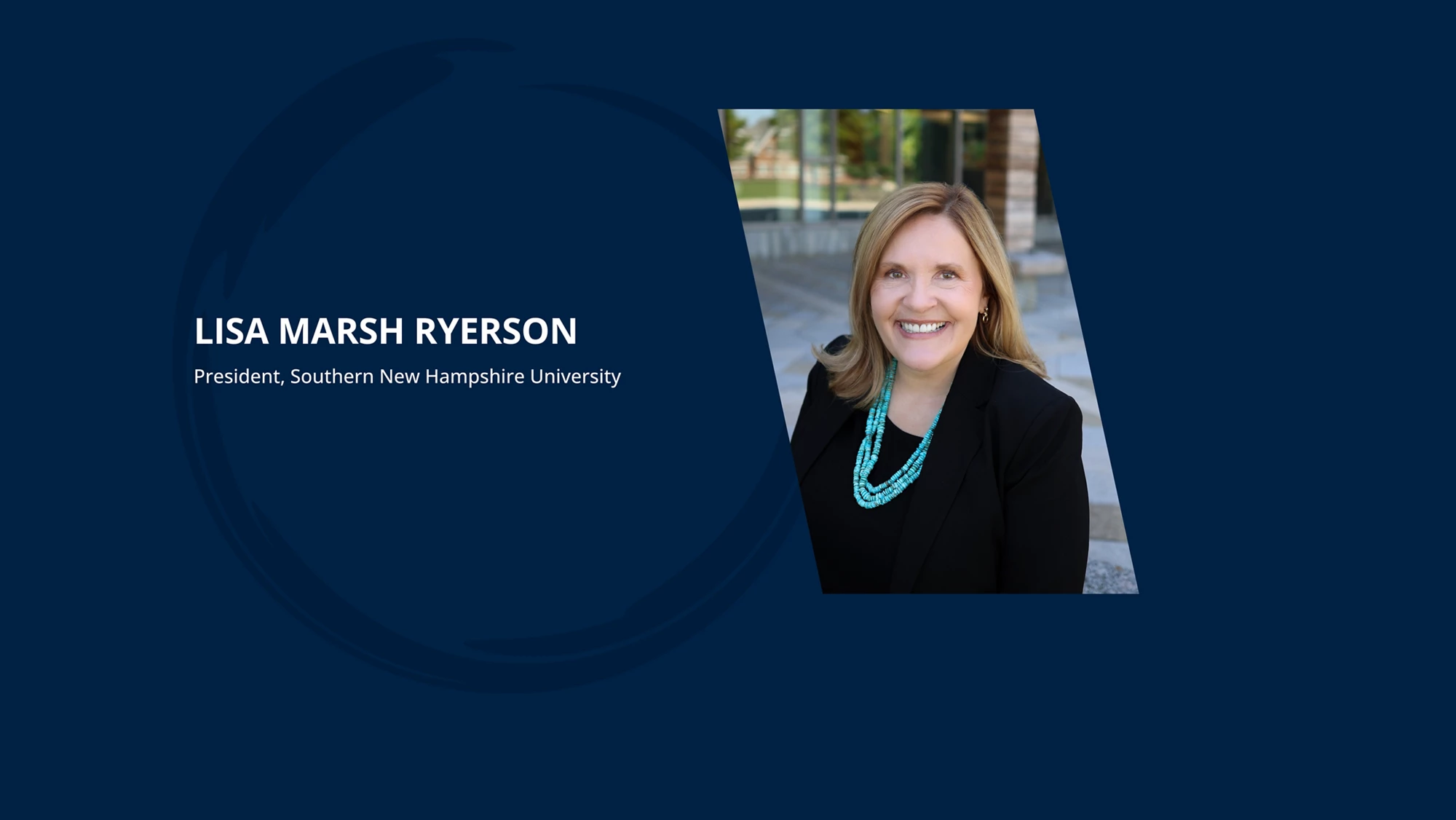
Interview with Lisa Marsh Ryerson, President, Southern New Hampshire University
As higher education expands to serve more diverse, global learners, institutions must rethink not only access—but how to truly support retention, completion, and meaningful career outcomes. At Southern New Hampshire University (SNHU), this means designing with learners, not for them—embedding flexibility, human connection, and real-world relevance into every aspect of the experience. In this IFC interview, Lisa Marsh Ryerson, President, shares how SNHU leverages partnerships, data, and technology to create scalable, student-centered models that prioritize equity, belonging, and long-term economic mobility.
What have you learned about designing programs that support nontraditional learners to persist and finish in low-resource settings?
Design begins with a simple but often overlooked principle: don’t design for learners—design with them. At SNHU, where our learner population exceeds 200,000 and reflects a wide intersection of identities, this means becoming a true listening organization. Every interaction—academic, operational, or support-related—is an opportunity to understand learners more deeply and incorporate their feedback into program design. This approach is especially critical in low-resource settings, where learners often balance multiple roles as working adults, parents, or first-generation students. Flexibility is not a feature—it is a necessity.
Access is only one piece of the equation. The real outcome is whether learners complete and achieve what matters to them. Access alone is not the goal—completion is. The true measure of success is whether learners achieve meaningful outcomes, whether that’s a credential, a degree, or a pathway to a better career. Finally, effective design is grounded in data. By leveraging multiple touchpoints and evidence-based decision-making, institutions can move beyond assumptions to identify the root causes of barriers to persistence.
Which partnerships have been most effective in expanding access or creating real employment pathways?
The strongest partnerships create mutual value: employers gain a more skilled workforce, while learners gain access to relevant, affordable pathways into careers. Employer partnerships are especially critical, often focusing on upskilling frontline workers who have historically been excluded from higher education. By working directly with companies to design programs—degrees, certificates, or micro-credentials—SNHU ensures learning aligns with real workforce needs and leads to in-demand jobs.
Community partnerships also play a vital role. Trusted local organizations provide coaching, encouragement, and wraparound support, while SNHU delivers flexible, online learning that fits learners’ lives. Together, they help individuals move from aspiration to attainment. Public sector partnerships help address access to benefits such as childcare, transportation, or food assistance, which can determine whether a learner persists or drops out.
How do you ensure your programs stay relevant to local job markets?
We rely on employer insight, labor market data, and continuous program review to ensure alignment with evolving workforce needs. Conversations with hiring managers provide real-time intelligence on the skills employers seek, while broader data identifies emerging trends across industries and geographies. This is especially important in a world shaped by rapid technological change. Fields like software development are transformed by AI, requiring institutions to anticipate—not just react to—shifting skill demands. Programs must evolve accordingly, embedding new competencies and making sure learners can demonstrate capabilities that translate directly to employment.
Partnerships again play a central role. Collaborating with employers to co-develop credentials or adapt degree programs allows SNHU to stay aligned with both current and future workforce needs. It also requires moving faster than traditional academic cycles—reviewing and updating programs with greater frequency to keep pace with change.
What does meaningful student support look like at scale in an online model?
It begins with listening. Learner voice is embedded into every aspect of the experience, informing how programs and services are designed and delivered. Support becomes proactive rather than reactive. We use data to identify early signals of struggle and intervene before challenges escalate.
Advising is a cornerstone of this model. Students are paired with dedicated advisors who guide them throughout their journey, offering both practical support and encouragement. Learners consistently point to human connection as a defining factor in their success.
Technology also plays an enabling role, not a replacement. By automating routine processes and improving efficiency, systems free up staff to focus on building relationships, coaching students, and providing individualized support. The goal is a model that is both people-first and AI-enabled. Flexibility remains essential, with support available across channels—phone, chat, or email—and systems designed so learners don’t have to repeat their stories, creating a seamless, respectful experience.
How are you addressing barriers like connectivity, device access, or digital literacy?
SNHU designs with these realities in mind, making programs low-bandwidth compatible, mobile-friendly, and accessible across different environments. Community organizations, libraries, and local centers provide access to devices, connectivity, and safe learning spaces for students who need them.
Equally important is preparation. Digital literacy is embedded into onboarding and early coursework, so learners build confidence with platforms, tools, and technologies from the start. At a broader level, SNHU continues to advocate for systemic solutions, recognizing that connectivity and digital equity remain unresolved global challenges. The goal is not just access to education—but equitable access to the infrastructure that makes learning possible.
What evidence do you see that Southern New Hampshire University programs are translating into better job outcomes for learners?
Evidence comes from both design and outcomes. SNHU embeds experiential learning directly into coursework, allowing students to apply what they are learning to real-world contexts. Assignments are often aligned with learners’ current roles or career goals, creating immediate relevance and practical skill development. Programs are continuously refined through employer input, ensuring skills, competencies, and credentials align with workforce demand. This includes a growing portfolio of micro-credentials spanning technical capabilities—such as data and AI—and durable skills like communication, leadership, and teamwork.
On the outcomes side, SNHU’s global alumni network of more than 300,000 graduates allows tracking of learner pathways and connections to career opportunities. Success is measured not just by completion, but by whether learners can translate education into mobility, meaningful employment, and long-term career growth.
What’s the biggest opportunity—and biggest risk—in scaling global access to higher education right now?
The greatest risk is not scaling at all. Expanding access to education is tied to economic mobility, stronger communities, and global progress. Failing to scale limits opportunity—not just for individuals, but for entire societies. At the same time, scale must be intentional. Expanding into new regions requires cultural understanding, relevant program design, and strong local partnerships. Institutions must resist the temptation to replicate existing models and instead adapt to local contexts—aligning with workforce needs, community realities, and learner expectations.
The greatest opportunity lies in global collaboration. By learning across institutions, sectors, and geographies, universities can share knowledge and continuously improve. But success depends on long-term commitment—building trust, fostering relationships, and ensuring expansion is rooted in respect and mutual benefit. Scaling higher education is not just about reach—it’s about responsibility. When done well, it unlocks opportunity for millions; done poorly, it risks leaving learners behind.
Interview with Lisa Marsh Ryerson, President, Southern New Hampshire University
As higher education expands to serve more diverse, global learners, institutions must rethink not only access—but how to truly support retention, completion, and meaningful career outcomes. At Southern New Hampshire University (SNHU), this means designing with learners, not for them—embedding flexibility, human connection, and real-world relevance into every aspect of the experience. In this IFC interview, Lisa Marsh Ryerson, President, shares how SNHU leverages partnerships, data, and technology to create scalable, student-centered models that prioritize equity, belonging, and long-term economic mobility.
What have you learned about designing programs that support nontraditional learners to persist and finish in low-resource settings?
Design begins with a simple but often overlooked principle: don’t design for learners—design with them. At SNHU, where our learner population exceeds 200,000 and reflects a wide intersection of identities, this means becoming a true listening organization. Every interaction—academic, operational, or support-related—is an opportunity to understand learners more deeply and incorporate their feedback into program design. This approach is especially critical in low-resource settings, where learners often balance multiple roles as working adults, parents, or first-generation students. Flexibility is not a feature—it is a necessity.
Access is only one piece of the equation. The real outcome is whether learners complete and achieve what matters to them. Access alone is not the goal—completion is. The true measure of success is whether learners achieve meaningful outcomes, whether that’s a credential, a degree, or a pathway to a better career. Finally, effective design is grounded in data. By leveraging multiple touchpoints and evidence-based decision-making, institutions can move beyond assumptions to identify the root causes of barriers to persistence.
Which partnerships have been most effective in expanding access or creating real employment pathways?
The strongest partnerships create mutual value: employers gain a more skilled workforce, while learners gain access to relevant, affordable pathways into careers. Employer partnerships are especially critical, often focusing on upskilling frontline workers who have historically been excluded from higher education. By working directly with companies to design programs—degrees, certificates, or micro-credentials—SNHU ensures learning aligns with real workforce needs and leads to in-demand jobs.
Community partnerships also play a vital role. Trusted local organizations provide coaching, encouragement, and wraparound support, while SNHU delivers flexible, online learning that fits learners’ lives. Together, they help individuals move from aspiration to attainment. Public sector partnerships help address access to benefits such as childcare, transportation, or food assistance, which can determine whether a learner persists or drops out.
How do you ensure your programs stay relevant to local job markets?
We rely on employer insight, labor market data, and continuous program review to ensure alignment with evolving workforce needs. Conversations with hiring managers provide real-time intelligence on the skills employers seek, while broader data identifies emerging trends across industries and geographies. This is especially important in a world shaped by rapid technological change. Fields like software development are transformed by AI, requiring institutions to anticipate—not just react to—shifting skill demands. Programs must evolve accordingly, embedding new competencies and making sure learners can demonstrate capabilities that translate directly to employment.
Partnerships again play a central role. Collaborating with employers to co-develop credentials or adapt degree programs allows SNHU to stay aligned with both current and future workforce needs. It also requires moving faster than traditional academic cycles—reviewing and updating programs with greater frequency to keep pace with change.
What does meaningful student support look like at scale in an online model?
It begins with listening. Learner voice is embedded into every aspect of the experience, informing how programs and services are designed and delivered. Support becomes proactive rather than reactive. We use data to identify early signals of struggle and intervene before challenges escalate.
Advising is a cornerstone of this model. Students are paired with dedicated advisors who guide them throughout their journey, offering both practical support and encouragement. Learners consistently point to human connection as a defining factor in their success.
Technology also plays an enabling role, not a replacement. By automating routine processes and improving efficiency, systems free up staff to focus on building relationships, coaching students, and providing individualized support. The goal is a model that is both people-first and AI-enabled. Flexibility remains essential, with support available across channels—phone, chat, or email—and systems designed so learners don’t have to repeat their stories, creating a seamless, respectful experience.
How are you addressing barriers like connectivity, device access, or digital literacy?
SNHU designs with these realities in mind, making programs low-bandwidth compatible, mobile-friendly, and accessible across different environments. Community organizations, libraries, and local centers provide access to devices, connectivity, and safe learning spaces for students who need them.
Equally important is preparation. Digital literacy is embedded into onboarding and early coursework, so learners build confidence with platforms, tools, and technologies from the start. At a broader level, SNHU continues to advocate for systemic solutions, recognizing that connectivity and digital equity remain unresolved global challenges. The goal is not just access to education—but equitable access to the infrastructure that makes learning possible.
What evidence do you see that Southern New Hampshire University programs are translating into better job outcomes for learners?
Evidence comes from both design and outcomes. SNHU embeds experiential learning directly into coursework, allowing students to apply what they are learning to real-world contexts. Assignments are often aligned with learners’ current roles or career goals, creating immediate relevance and practical skill development. Programs are continuously refined through employer input, ensuring skills, competencies, and credentials align with workforce demand. This includes a growing portfolio of micro-credentials spanning technical capabilities—such as data and AI—and durable skills like communication, leadership, and teamwork.
On the outcomes side, SNHU’s global alumni network of more than 300,000 graduates allows tracking of learner pathways and connections to career opportunities. Success is measured not just by completion, but by whether learners can translate education into mobility, meaningful employment, and long-term career growth.
What’s the biggest opportunity—and biggest risk—in scaling global access to higher education right now?
The greatest risk is not scaling at all. Expanding access to education is tied to economic mobility, stronger communities, and global progress. Failing to scale limits opportunity—not just for individuals, but for entire societies. At the same time, scale must be intentional. Expanding into new regions requires cultural understanding, relevant program design, and strong local partnerships. Institutions must resist the temptation to replicate existing models and instead adapt to local contexts—aligning with workforce needs, community realities, and learner expectations.
The greatest opportunity lies in global collaboration. By learning across institutions, sectors, and geographies, universities can share knowledge and continuously improve. But success depends on long-term commitment—building trust, fostering relationships, and ensuring expansion is rooted in respect and mutual benefit. Scaling higher education is not just about reach—it’s about responsibility. When done well, it unlocks opportunity for millions; done poorly, it risks leaving learners behind.
This interview has been edited for length and clarity.