
 Photo: KICB
KICB's CEO on pioneering sustainable finance, expanding access for small businesses and women entrepreneurs, and what a quarter century of partnership with IFC has meant for the country.
 Photo: KICB
When the Kyrgyz Investment and Credit Bank opened its doors in 2001, the country's private sector had few places to turn for long-term financing. Twenty-five years later, KICB has grown into one of the Kyrgyz Republic's leading banks, navigating revolutions, a global pandemic, and financial crises while staying true to its founding mission.
In this interview, KICB's CEO reflects on the bank's journey, its landmark issuance of the country's first sustainability bond, and why supporting micro and small enterprises and women entrepreneurs is not just a social priority, but an economic imperative.
1. KICB was established in 2001 as a joint venture of the Kyrgyz government and a number of development finance institutions, including IFC. What was the rationale of its establishment at the time and how has KICB been transformed then into one of the leading banks of the country?
In the late 1990s, the country’s economy faced a challenging situation. Medium-sized and large enterprises needed longer-term loans to grow, but local banks operating just didn’t have the resources or interest to help.
There was a pressing need for a strong financial institution to support private sector growth and strengthen the country’s banking system.
So, in 1998, the government of the Kyrgyz Republic partnered with international financial institutions, including Aga Khan Fund for Economic Development, German Investment and Development Corporation (DEG), European Bank for Reconstruction and Development (EBRD), International Finance Corporation (IFC), and KfW Development Bank to lay down a groundwork for a new bank.
With an initial capital of $7 million, they launched the Kyrgyz Investment and Credit Bank (KICB). By late summer 2001, KICB opened its doors to clients for the first time offering Kyrgyz citizens access to long-term loans, significantly facilitating business development. International banking traditions and high level of service, which have been KICB's business card since its first days, quickly strengthened the bank's position and enabled it to become a universal bank offering a full range of banking services and becoming one of the country’s top banks.
2. What were the main challenges KICB faced over the past 25 years in the country’s banking sector and how did you overcome them?
Over the years, KICB has faced and overcome many events and challenges that impacted the country’s economy and banking sector. These included revolutions, in 2005, 2010, and 2020, as well as the pandemic and global financial crises.
Despite these difficulties, KICB has remained a reliable and stable financial institution. The bank has stayed true to its mission.
KICB’s strong financial history, modern banking products and high quality of service have helped it overcome challenges. A clear system of risk management, planning, and continuous improvement has allowed KICB to remain a top-ranked bank in the country for 25 years.
3. KICB’s collaboration with IFC began from the moment of the bank establishment. What value did IFC add over the years to your mission?
IFC, as one of the founding shareholders of the Bank, has made invaluable contribution. It regularly shares expertise, participates in new projects, and supports all our endeavors. Over 25 years of collaboration, the Bank has successfully grown its client base, expanded its product line, and improved access to finance in remote regions. Every joint project with IFC focuses on sustainable private sector growth, job creation, environmental improvements, and better corporate governance. We greatly appreciate IFC’s tremendous support, and we look forward to a long-term, mutually beneficial partnership for the country’s future development.
4. Last year, KICB issued the first sustainability bond in the Kyrgyz Republic, marking a significant milestone both for the bank and the country’s financial sector. What has inspired KICB to launch this pioneering bond, and why is this achievement significant for the bank and the country’s economy?
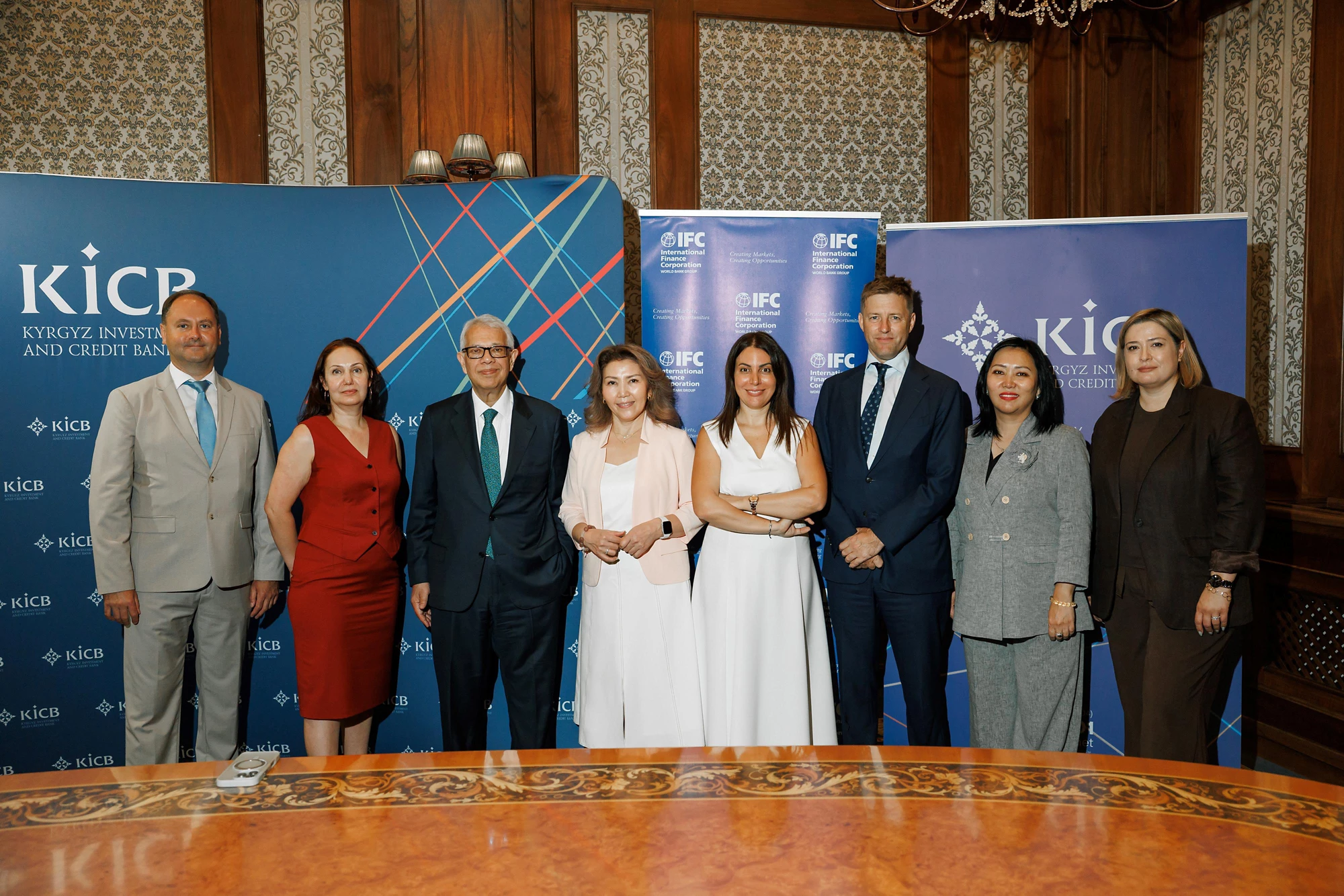
In June 2025, KICB issued sustainability bonds totaling 1.3 billion som. IFC fully subscribed to the bonds. This issuance marked an important milestone for KICB, advancing its ESG policy and bringing leading international practices in environmental, social, and corporate governance into the Bank.
The international rating agency Standard & Poor’s confirmed that KICB’s sustainable financing framework is aligned with international standards and complies with the Green Bond Principles and Social Bond Principles of the International Capital Market Association (ICMA). This recognition formed the basis for the Bank’s decision to issue sustainability bonds.
Over the past 25 years, KICB and IFC have successfully worked together on projects that provide financing to businesses, microfinance support for low-income families, and funding for women entrepreneurs. These efforts help make the country’s economy more resilient.
5. How important is innovation for your customer-centric focus and what are some examples of innovative approaches you have developed?
KICB’s strategy is based on the Bank’s mission: “A Reliable Bank for a Better Life.” Through its work, KICB contributes to the prosperity of the Kyrgyz Republic, with a strong commitment to its clients, communities, and the environment.
KICB was the first bank in the Kyrgyz Republic to issue bonds in 2013 and later became the first bank to place sustainability bonds jointly with IFC. KICB was also the first bank in the Kyrgyz Republic to obtain a license for electronic money.
As a pioneer of electronic wallets in the banking sector, Elsom, launched in June 2014, has become a part of daily life for many people in the country. Guided by its mission to make modern financial services accessible and expand available options for clients, Elsom was integrated into the KICB mobile application. This integration enables customers to access a wider range of digital banking services remotely, including international transfers (SWIFT), loan applications, and ordering Visa and Mastercard payment cards online.
KICB was the first and only bank in the Kyrgyz Republic to have direct correspondent accounts with Citi bank and Emirates NBD, two of the largest financial institutions in the United States and the United Arab Emirates. Thanks to these partnerships, KICB offers its clients special conditions for SWIFT transfers that can’t be provided by other banks in the country.
6. KICB prioritizes improving access to finance for micro and small enterprises and women entrepreneurs. Why is this important for the Kyrgyz Republic?
KICB pays special attention to supporting micro and small enterprises, which not only fosters economic growth and development but also plays a vital role in job creation across the country. In this regard the Bank actively implements digital solutions, making banking services more accessible, faster, and secure.
For example, customers can download the mobile application and get an online loan in just a few minutes. This is important not only for entrepreneurs themselves but also for the country as a whole. In the Kyrgyz Republic, over 60% of businesses are micro and small enterprises. These businesses operate quickly and need fast, secure access to financing.
A well-developed micro and small enterprise sector can greatly boost the country’s economic growth. The Kyrgyz Republic does not possess large natural resources, so micro and small businesses are the key drivers of the national economy.
KICB also takes a special approach to supporting women in business. The Bank supports women both as clients and as team members. It is encouraging that more than half of KICB employees are women, including specialists in digital technologies.
Supporting women in business is not just about equality. It is also a key step toward sustainable economic development and is a priority for the Bank. Through the dedicated “Mykty Aiym” program, women entrepreneurs can receive financial support on favorable terms. They also have access to training and advisory services.
7. What additional steps can financial institutions take to make funding from formal financial institutions even more accessible and effective for small businesses and women entrepreneurs?
Banks should prioritize the following key areas:
• Expanding access to finance in regions by leveraging remote services and mobile banking applications. Offering a board spectrum of financing options, ranging from small loans to large, long-term investments.
• Launching initiatives to improve the financial literacy of the population, empowering individuals and entrepreneurs to make informed decisions.
• Maintaining a strong emphasis on the security and quality of banking products and services.
• Embracing international best practices and continuously introducing innovative banking services and products.
Most importantly, it is critical to help people learn how to manage their finances responsibly and securely, and to encourage them to seek professional advice and financial guidance from banks without hesitation.
 Photo: KICB