
IFC is working with global insurers through an innovative new tool to boost local currency financing in Asia, helping businesses manage currency risk, grow, and create jobs.
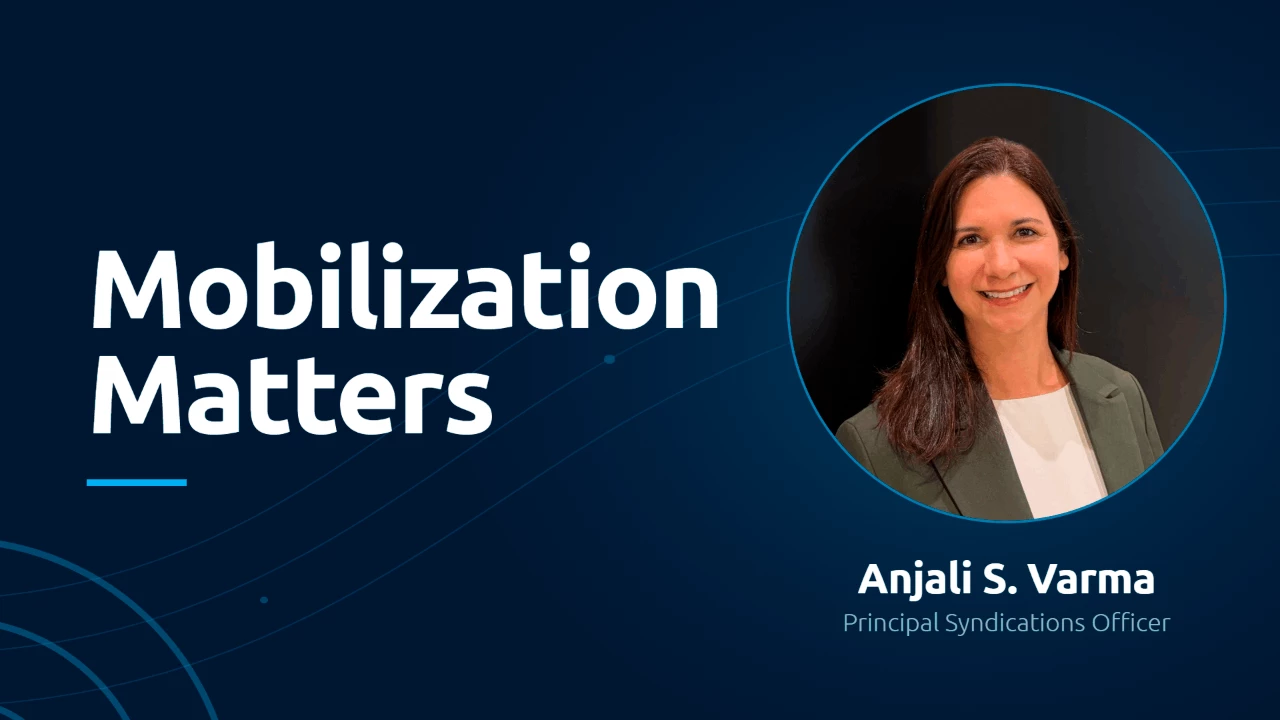
In this sit-down interview with Anjali Varma, Head of Loan Syndications for IFC in Asia, we explore how IFC is bringing insurance capacity into local currency financing, helping clients reduce currency risk and expand access to finance.
Why is local currency financing important for IFC's clients in Asia?
That’s an important question. The simple answer is that companies need financing that matches the way they earn their money. Most companies in emerging markets generate revenues in local currency, so borrowing in hard currencies like dollars, euros or pounds can expose them to currency risk, particularly during market volatility. Local currency financing helps them manage the risk, better match their assets and liabilities, and keep their focus on growing the businesses to create jobs and drive growth.
This is especially important in Asia. After the 1997 Asian financial crisis, many companies and governments now seek to reduce currency mismatches, with regulations introduced in some markets limiting foreign currency borrowing. If the local currency drops in value, a hard currency loan suddenly costs a lot more to repay. Borrowing locally removes that uncertainty.
How can development financiers advance local currency mobilization?
The key is to tailor our approach to each country, working with foreign or local banks to help clients access local currency financing. However, in certain Asian markets, local banks have deep pools of liquidity and strong, longstanding relationships with clients where they lend bilaterally rather than through syndicated lending. For these markets, we need new solutions, and local currency credit insurance has emerged as a valuable mobilization tool. Using credit insurance frees up our balance sheet capacity, allowing us to support more businesses, create jobs and drive growth.
What is innovative about these local currency mobilization deals?
I think the innovation lies in the deliverable nature of the structure. Historically, insurers may have participated in local currency transactions, but premiums and claims were typically settled in U.S. dollars or another hard currency. That model is still valid and particularly helpful in more heavily regulated markets.
With this new tool, deliverable local currency credit insurance, the insurers exchange cashflows in the underlying local currency onshore in the relevant country.
For us to push the envelope on this, it required extensive collaboration across IFC and the insurers, including counsel, treasury and cash management teams, and banking partners. Together, they had to navigate country regulations and create operational mechanisms that allowed insurers to receive local currency payments without establishing extensive onshore infrastructure in each market by leveraging correspondent banking networks.
What do deliverable local currency transactions signal to the market?
What we’ve seen is that these transactions demonstrate how IFC can bring international insurance capacity into local currency financing in emerging markets. A transaction in Thailand, for example, was IFC’s first-ever deliverable local currency credit insurance transaction globally, as well as a first for our insurance partner in Asia. Working with IFC gives insurers access to markets and local currency assets that they may not otherwise access through commercial banks.
We followed this up with a transaction in Indonesia, which showed that the model could be replicated with additional insurers in another major Asian market. We’ve also cleared the structure for Philippine Peso and will continue to broaden currencies. Together, the transactions are moving the model from concept to execution, demonstrating that credit insurance can be used to mobilize private capital in local currency and help borrowers reduce currency risk. They also create a blueprint that can be scaled across markets and currencies, opening a new channel for international insurance capital to support local currency financing in emerging markets.
What were the biggest lessons from these transactions?
One of the biggest lessons was the importance of partnerships. Successful execution required close collaboration across IFC teams, insurers, correspondent banks, and legal advisers. We also learned that local expertise matters. Partners with a deep understanding of local markets, regulations, and banking systems helped us move faster and build confidence in the new structures.
Perhaps most important, the leg work is a one-time investment per country. The operational and regulatory analysis conducted for the two transactions does not need to be repeated for future deals. Further, we now have the framework and relationships in place to efficiently scale this local currency mobilization tool to further countries in Asia and beyond.
What excites you most about the future of local currency mobilization in Asia?
What excites me is the opportunity to scale and the momentum has been encouraging. In FY26, IFC doubled local currency mobilization across Asia year-on-year, representing about 20 percent of the region's syndicated volume. Local currency credit insurance accounted for roughly a quarter of that mobilization, highlighting the potential of this new tool. We are also seeing growing interest in applying similar approaches beyond Asia, including in Türkiye and parts of Latin America, underscoring the broader relevance of local currency solutions.
Our ambition is to expand insurer participation, enter new markets, and increase transaction sizes. We would like to see local currency mobilization via credit insurance become a mainstream solution for supporting the growth of local entrepreneurs and small businesses.