




IFC and The MasterCard Foundation launched a $37.4 million partnership to increase access to financial services for an estimated 5.3 million people in Sub-Saharan Africa.
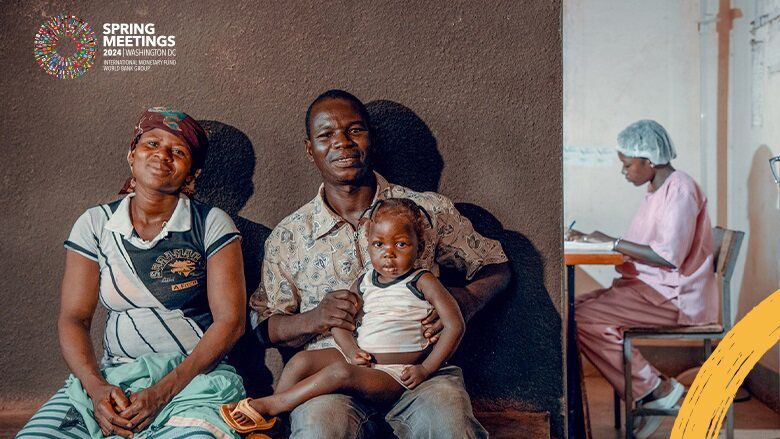
Fifty percent of adults worldwide report having a bank account at a formal financial institution. In Sub-Saharan Africa, this is the case for only about a quarter of adults. Given their strong focus on the poor and potential for reach, microfinance and mobile financial services have become top priorities on IFC’s financial inclusion agenda.
“Disadvantaged people derive real benefits from having more control over their finances, and our partnership with IFC will help bring responsible financial services to a significant number of people in Sub-Saharan Africa,” said Reeta Roy, President and CEO of The MasterCard Foundation.
“We have, in IFC, a highly collaborative and ambitious partner with whom we have a true alignment on our vision and values, and IFC has a capacity and expertise to deliver results on an unprecedented scale."
Through this new partnership, IFC and The MasterCard Foundation will help microfinance banks expand more rapidly and develop new products and cost-effective delivery channels, while expanding coverage in new, often hard-to-reach locations. The project will also help providers to deliver low-cost mobile financial services to low-income customers.
Since its first microfinance investment in 1997, IFC’s involvement in microfinance has steadily increased, and IFC is now one of the top three global investors in microfinance. As of December 2011, IFC had directly committed over $2 billion in investments to microfinance projects globally, with more than 150 financial institutions in over 60 countries.
“The MasterCard Foundation and IFC share a strong commitment to innovation and knowledge-sharing as a means to support economic development and financial inclusion in Africa and other emerging markets,” said Nena Stoiljkovic, IFC Vice President for Business Advisory Services. “This significant partnership leverages IFC’s global expertise, local knowledge, and client networks to promote greater financial inclusion.”
IFC also invested early in mobile financial services, supporting pioneers such as WIZZIT in South Africa, and providing advisory support to MTN in Nigeria and Airtel in Madagascar. IFC’s portfolio includes six investments with dedicated e-payment service providers, and investments with financial intermediaries and mobile network operators offering mobile wallets.
The MasterCard Foundation has become a major player in the field of microfinance, particularly in Sub-Saharan Africa, having forged partnerships worth more than $230 million since its inception in 2006. To date, these partnerships have helped provide financial services to over a million people, and provided another two million with access to financial education.
“In a changing global scenario, non-traditional donors, including foundations, are becoming crucial partners,'" said Anita Bhatia, Director of Partnerships and Advisory Services Operations. “As increasingly important actors in the development space, foundations are bringing much needed flexibility, dynamism, and resources to solving development challenges."
IFC’s microfinance and mobile financial services programs in Sub-Saharan Africa have received support from the African Development Bank, Austrian Development Bank, the Swiss State Secretariat for Economic Affairs (SECO), and the governments of Austria, Denmark, Japan, Luxembourg, and the Netherlands.